
Demand Generation for MSPs: How to Build a Predictable Pipeline in a Crowded Channel Market
Follow us

For MSPs, demand generation is the key to survival or success in today’s extremely competitive channel environment. There are thousands of managed service providers, all struggling for the same referrals that can be found in both the SMB and mid-market segments. They rely on referrals simply isn’t a right way to produce consistent growth. MSPs need to target and communicate with a strategy, leverage channel marketing, and measure the pipeline growth. This will help them generate B2B demand.
This guide on demand generation for MSPs is for you to create a marketing strategy that will help you shape demand generation into sales interactions with your MSP business. Supporting you on finding a customer profile, qualifying your leads before sending them to the sales team. It passes all the way through to marketing the right people the right messages. It’s most effective when your inbound and outbound demand generations are unified around the same target accounts and business challenge.
Why Demand Generation for MSPs Requires a Different Approach
The process that MSPs go through to create customer purchases is distinctively different from the traditional B2B software buyer. They are not thinking about managed IT services until something catastrophic has happened, like a breach, deadline, or they are disgruntled and frustrated with their internal team. MSPs need to build awareness and urgency before this tipping point.
The key to demand generation for MSPs is to mix-in education, trust-building, and problem led marketing techniques. The objective is to make the conversation about your MSP’s services – the obvious one when customers need to make a purchase.
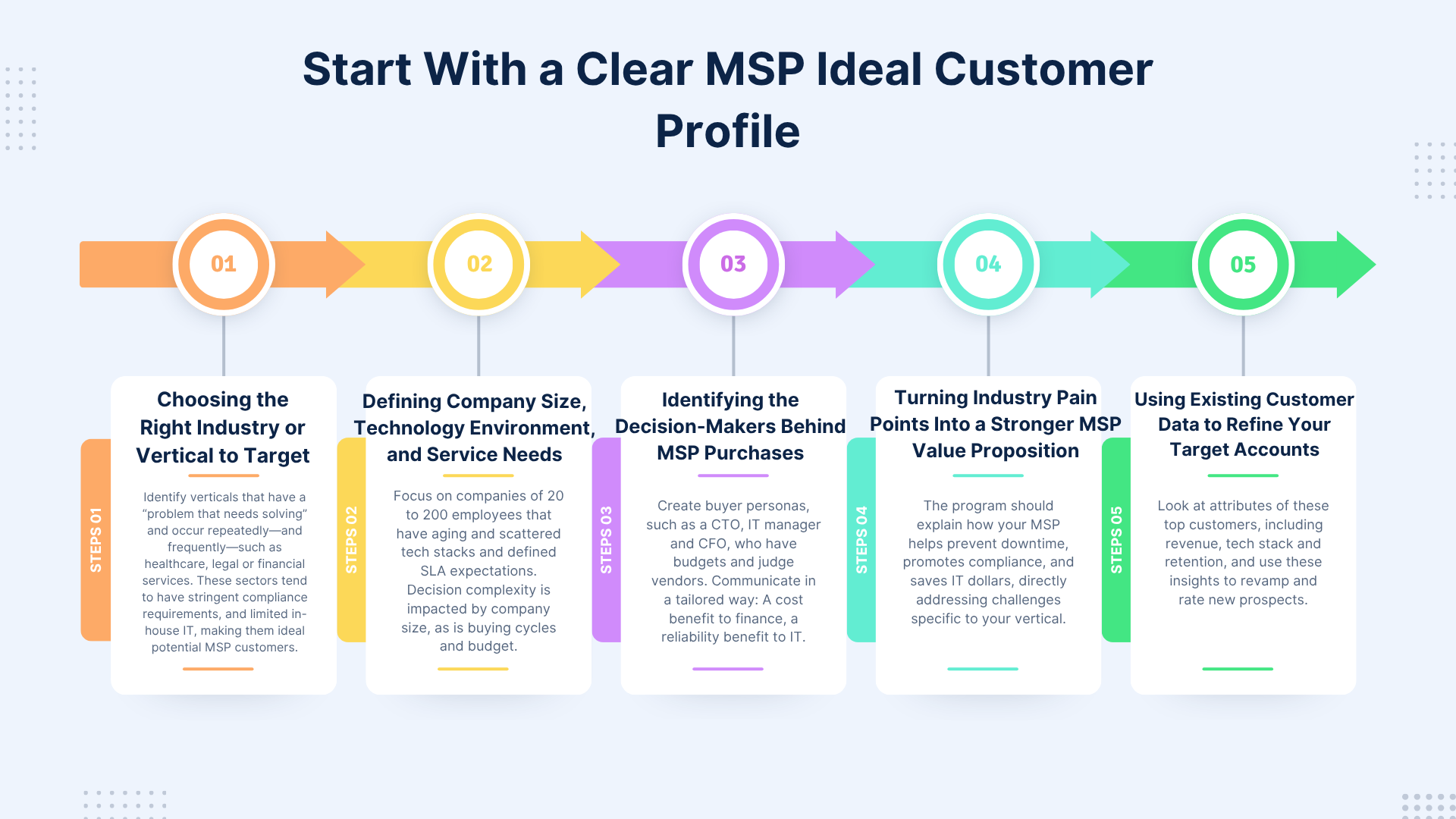
Start With a Clear MSP Ideal Customer Profile
Build a Target Account List That Your Sales Team Can Actually Use
Combining Firmographic and Technographic Data
With firmographics (industry, size, revenue band, geography) start broad across ICP. Narrow down with technographics; look for tools your best customers are already using (HubSpot, Salesforce, AWS). It determines which accounts have stacks that match and have a higher conversion rate.
Identifying Businesses With Relevant Technology and Security Needs
Target accounts that use out-of-date CRMs, have no marketing automation or are in regulated industries with particular security needs. Technographic Segmentation defines those that need integration, replacement or compliance upgrading now.
Verifying Account and Contact Data Before Outreach
Add current staff of records, current funding status, and changes to leadership. Validate emails and phone numbers, deduplicate and identify low confidence data for follow up. Stale information is a death knell to reply rates; new and accurate data helps with deliverability and personalization.
Using Intent Signals to Prioritize Active Buyers
Overlay intent data, to rank accounts by buying readiness. Listen for the clues of “hot” accounts that are picking up on repeated, recent clues like visits to websites, keyword research, job postings, and funding rounds. Do not send to SDRs first & assign a generic message list, send the message first according to observed behaviour!
Create an Inbound Engine That Generates MSP Demand
Capture Local Demand With Search and Local SEO
Tune your Google Business Profile with the proper company categories, service regions, images and unified NAP in directories. If you can, provide local services based pages, and display local proof, such as clients, projects, and community signals, not thin city pages. Keep review velocity, reply within 24 hours to respond to “managed IT services near me” and engender trust and visibility.
Create Content Around Specific IT, Security, and Compliance Problems
Create page for a search intent and establish pages that provide answers to genuine prospect questions. Prefer HIPAA/PCI, ransomware response, cloud migration, and vendor consolidation for solving compliance issues. More relevant snippets and shorter lists, driven by vertical and local signals.
Use High-Value Lead Magnets to Capture Prospect Interest
Provide a calculator, checklist or template with calendar booking links. Focus on only to those who need it as a result of completing a simple text box or to get them to fill out quickly. This expedite the handoff.
Build Case Studies Around Measurable Business Outcomes
Create case studies that include results namely, downtime reduced, MRR saved, and audited. Provide a name for a client location/industry to make it more relevant and believable. Lastly, provide pre/after figures and CTAs for replication.
Turn Educational Content Into Long-Term Lead Nurturing
Route captured leads to segmented nurture tracks by industry, problem and stage. Set up lead scoring to prioritize top-performing prospect leads and to automate follow-up sales emails when trigger points are hit. Clean up your database on a regular basis and update your content to maintain organic traffic and enhance attribution.
Use Outbound Channels to Create Demand Before Prospects Reach Out
Combine Cold Email, LinkedIn, and Phone Outreach
Use email for in-depth value proposition, LinkedIn for professional connections and social proof, and phone call for a discovery call. This trio puts the “touchpoints” on for the prospects, about respecting their preferences across all channels.
Personalize Outreach Around Real Business Problems
Explore research prospect opportunities via company visits, industry trends and company news. Create messages which speak in the terms of their pain points, focusing more on their business situation and context rather than on product benefits.
Use Account and Prospect Intent to Prioritize Prospecting
Run intent data and site visitor tracking to discover high-value accounts where there is sign of intent. Target outreach to existing company research into solutions, boost, sales conversance probability and effectiveness.
Build Outreach Around Conversations Instead of Hard Sales Pitches
Make initial contact acts discovery conversations – to understand needs, not to sell. Before bringing up product demonstrations or discussions of pricing, ask intelligent questions, communicate your own understanding and build trust.
Coordinate Sales and Marketing Around the Same Target Accounts
Ensure message, timing and target account lists are aligned across teams for unified prospect journeys. When team members are reviewing the same data and executing coordinated campaigns, there is no confusion or providing “false signals” to prospects. While the brand is heard throughout the sight, hearing, and touchpoints of the prospect.
Turn MSP Marketing Into a Multichannel Demand Generation System
Connect Inbound and Outbound Campaigns Around the Same ICP
Integrate your ICP for SEO, content, paid ads, email, and SDR outreach. Create consistent and relevant messaging for all outbound messages. As for inbound visitors, use shared personas, pain points, and triggers to build trust and increase pipeline generation.
Use Content Syndication to Expand Reach Among Target Accounts
Implement partner marketing. Leverage best assets (guides, benchmarks, playbooks) on partner sites, industry platforms, and LinkedIn groups. Syndication can help you position your content and experience with IT modernization and security to those whose attention you are directly seeking.
Retarget Engaged Accounts With Relevant Offers and Content
Create a segmentation of website behavior, content consumption, and ad interaction to enable personalized CTAs such as a security assessment, migration checklist, or demo invite. Retargeting can be a way for your MSP to remain memorable to accounts that are still moving towards converting and deliver offers that are relevant to the context.
Use Webinars, Events, and Educational Content to Build Trust
Run “live” Webinars on related ransomware readiness topics, cloud cost optimization, security compliance changes, etc. Learning formats demonstrate competence, and neutralize objections on the spot, attracting high-intent leads who appreciate proactive, collaboration-focused assistance.
Keep Prospects Engaged Through Nurture Sequences
DRIP Campaigns to automate with progressive value – case studies, ROI calculators and to-do lists! Having a segmented nurture flow improves conversion rates, streamlines the sales funnel, and prepares accounts for a sales call when a buying signal is received.
Qualify MSP Leads Before They Reach the Sales Team
Separate Account Fit From Actual Buying Intent
Identify both companies that are a good fit for your ICP and companies that indicate an actual buying signal. Fit applies to company size, industry, role, etc.; intent applies to actions such as demo requests or visits to the pricing page, etc.
Score Leads Based on Engagement and Business Need
Score behaviors (E-mail clicks, content downloads, webinar viewing) and context of business (pain points, project time personal constraints). Add up fit score and engagement score and objectively rank leads.
Identify MQLs That Are Ready for Sales Follow-Up
Marketing Qualified Leads are leads that have repeated interactions and can be associated with ICP. Often they’re set to pitch them but not ready to go the sales and outreach route.
Use Qualification to Prioritize Sales-Ready SQLs
Sales Qualified Leads are probably seeking quotes, a demo or consultation. Make sure to work through them first as they are good for immediate AE involvement.
Nurture Good-Fit Accounts That Are Not Ready to Buy
If two accounts aren’t in sync, and are not synced by timing or budget, you’ll have to run targeted nurture feeds. Use case studies, ROI calculators, and educational materials to help build their trust until they are sales ready.
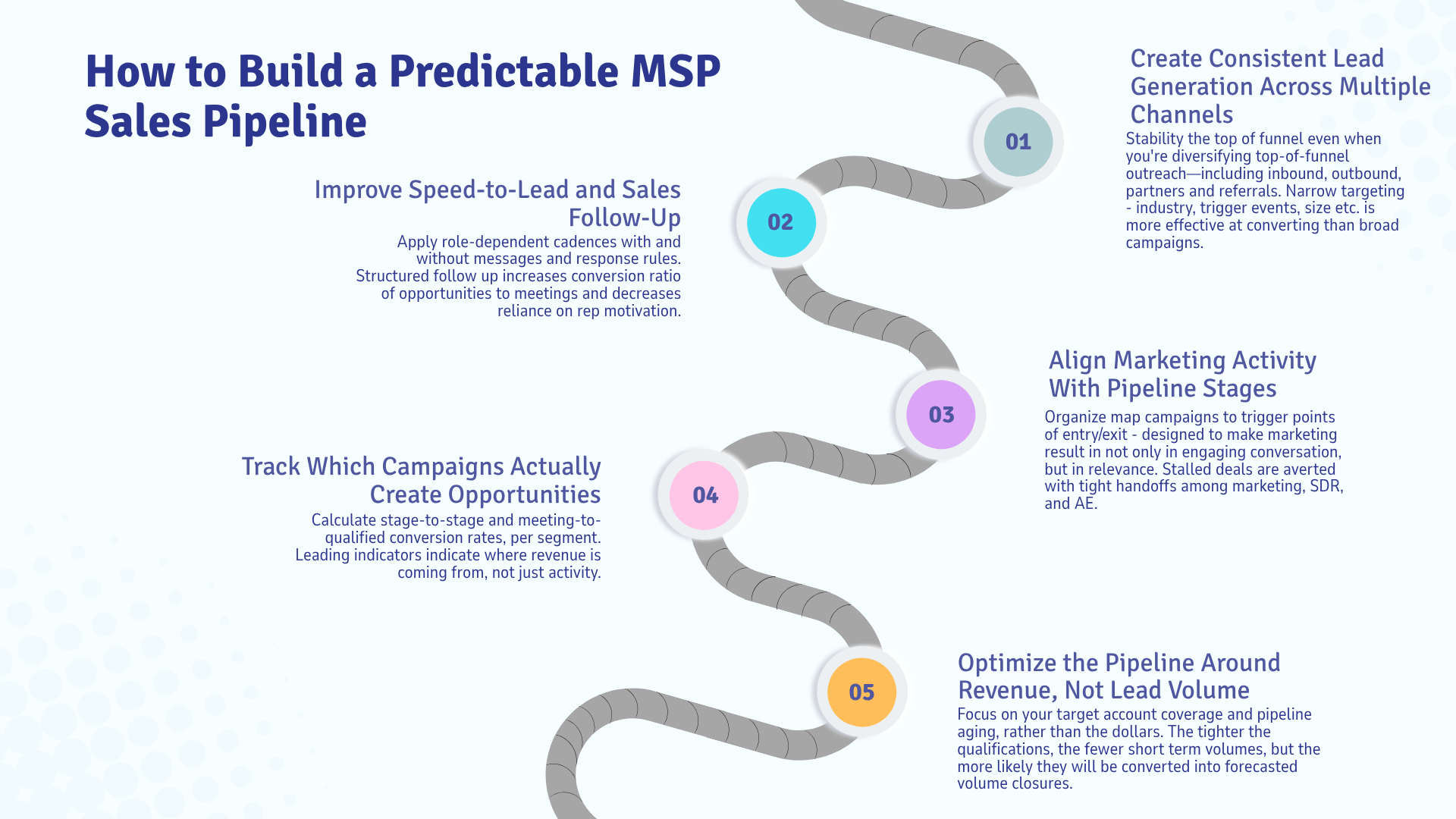
How to Build a Predictable MSP Sales Pipeline
Common Demand Generation Mistakes MSPs Should Avoid
Mistake 1: Imbalance between Product-driven and Emotional content
Many SaaS businesses tend to only pay attention to features and not feelings. To prevent this, discover the reasons, and the problem your audience certainly has. Utilize storytelling to make your change into people’s faces and substantiate with details.
Mistake 2: Poor Data Management
Not empowering data quality can lead to poor marketing decisions and risk. Designate a chief data officer to ensure data integrity and take advantage of CRM systems for efficient management. Consistently and regularly check quality of the data to ensure that the demand is effective.
Mistake 3: Over Using Gated Content
Gated content is great for acquiring leads, but it can repel potential customers. Proficiency in managing its use and deliver valuable information without gating to grow relationships and increase reach.
Mistake 4: Quitting too soon
Demand generation is a long-term approach. Don’t settle for less than maximum efforts because of unfounded expectations. To realize that establishing trust and awareness takes time, and that sales cycles are long, and need building over time.
Mistake 5: Focusing Solely on Lead Generation KPIs
A lead generation measurement strategy can be so counterproductive that the success of the website is jeopardized. Instead, follow a full-funnel strategy, tracking a range of KPIs which align to the entire customer journey and enable growth.
Conclusion: Why IDBS Global Is the Right Demand Generation Partner for MSPs
Creating a predictable pipeline through demand generation for MSPs is a business strategy that demands both strategy, execution and ongoing optimization. Many MSPs don’t have the time, resources and in-house expertise to achieve. IDBS Global focuses on delivering vertical specific demand generation opportunities. We execute across multiple channels and optimized to maximize their fit, thanks to data.
With IDBS Global, the demand generation for MSPs turns into a scalable machine, as an alternative to an ad hoc approach. With everything from ICP to multichannel campaigns and pipeline analytics. We make sure all of your actions are backed by revenue. With the help of demand generation for MSPs. Lastly, we create the success you’re looking for and make your MSP marketing a predictable growth engine.

Author: IDBS Global
Turning Data into Demand, Fueling B2B Growth with Precision and Purpose.