
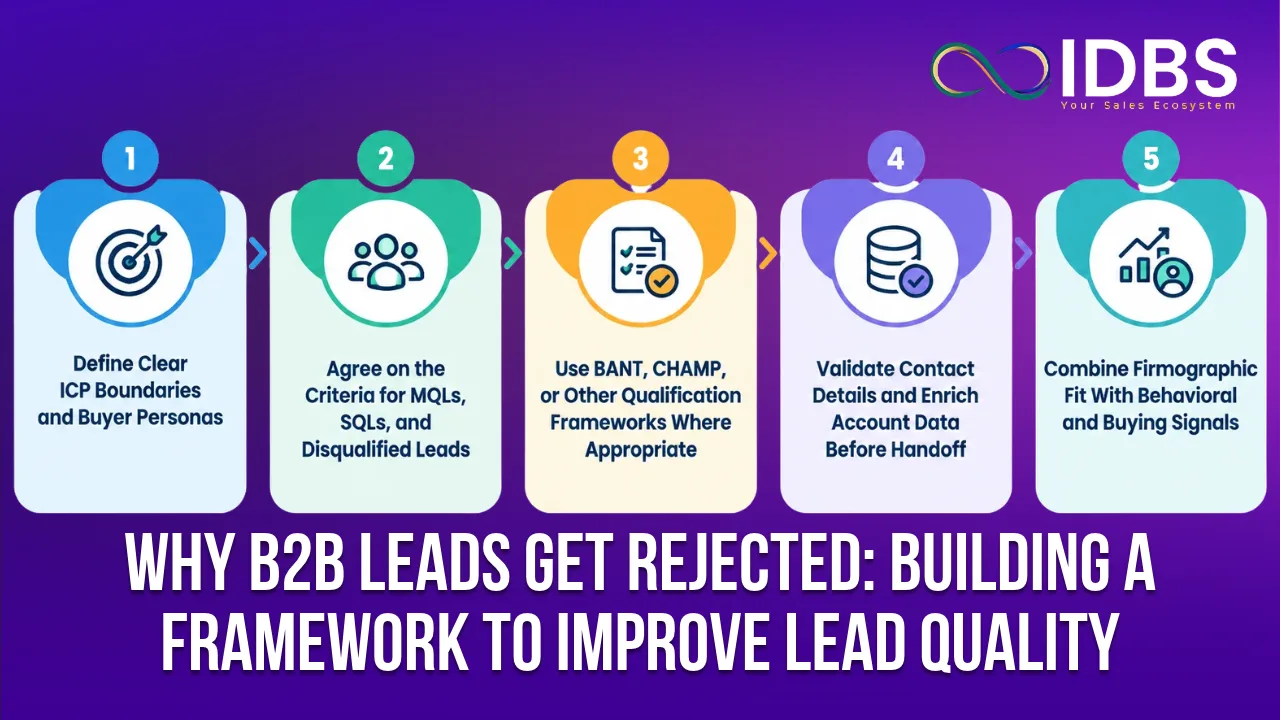
Why B2B Leads Get Rejected: Building a Framework to Improve Lead Quality
Follow us

Sales teams turn down leads for a reason. If marketing produces leads that aren’t the kind that are buying, they don’t have the authority to make a purchase, or buyers aren’t seriously thinking about it, sales wastes two minutes, and the pipeline creates poor quality leads. The B2B lead rejection problems are widely understood, making it easier for revenue teams to go to the source to fix it. Teams could view every rejection as “bad lead” and take advantage of rejection data to better target, qualify, cleanse data, and ensure marketing-sales alignment. This blog details some of the B2B lead rejection reasons, the value of sales pushback, and how to develop a practical B2B lead quality framework to create more quality opportunities.
What Does Lead Rejection Mean in B2B Sales?
Lead rejection is when a salesperson declines a lead based on fit, intent, data quality, or readiness to buy criteria. In B2B businesses, there are many times when sales is turning down a huge number of marketing-qualified leads (MQLs) since they have different understandings of what constitutes as a qualified lead.
Some leads do require more nurturing, more accurate data or additional connections to contacts within the buying group – a rejection is not a final “no.” There is a need to be permanently disqualified as they are not part of the company’s target market. Clear B2B lead rejection reasons turn themselves into valuable feedback marketing can take action on.
The Most Common B2B Lead Rejection Reasons
The Company Does Not Match Your Ideal Customer Profile
A lead could be a viable lead, but can be before an industry, company size, revenue range, location or use case with some ICP. Strictly enforce firmographic filters on top of the delivery process in order to avoid off-target accounts from reaching reps.
The Contact Is Not the Right Persona or Decision-Maker
People with no authority to influence the purchase (students, competitors, contacts) can engage but have no influence. It is common that sales rejects leads because of failing to match target roles or levels of seniority.
The Prospect Has No Clear Business Need
Requesting a webinar download or ebook doesn’t always mean purchase intent. If there isn’t a need, problem or existing project that warrants a lead to move to nurture. It may be better for them to move to sales follow-up.
Budget Constraints or Missing Purchase Approval
Even if a prospect is interested, the purchase process is too far out, the approval has been denied or there are no funds for the purchase. These leads need to be drawn out of the irrelevant leads and added to a nurture path.
The Prospect Is Interested but Not Ready to Buy
A research stage buyer might fit into your ICP description; however, they don’t have a specific timeframe or project. The dangers to future B2B demand generation are that a prospective buyer is considered “rejected” for the future and never brought back. The risk is that if a diver is rejected for the future, he or she may never be called back.
Incomplete, Inaccurate, or Outdated Lead Data
Outreach is hindered and rep trust is lost because of bounced emails, disconnected numbers, missing fields, stale titles, and unverified companies. Confirm contact and company data, ensuring it is also kept clean throughout the CRM lifecycle.
Duplicate Leads and Existing Opportunities
The existing customers, open opportunities, and competitor records take up sales time and skew the sales reports. Remove duplicates and exclude them from CRM opportunities before routing to sales, record clearing and screening.
The Lead Was Generated Through Low-Intent Engagement
A lead score can be designed to appear high because of email opens, social clicks, and one-time content downloads. But that doesn’t necessarily signify that the lead is ready to convert. When lead scoring is based on activity rather than fit and intent, sales gets leads that may sound great on paper, but don’t convert in face-to-face discussions.
SQL Rejection Reasons: What Sales Pushback Reveals About Your Targeting
Mismatch in ICP Targeting Audience
If leads consistently don’t conform to the industry, company size, revenue, geographic, or use case criteria, it is almost certainly the case of audience definition and source filtering, not sales efforts. Set and apply “firmographic” rules and “account-fit” rules before the lead enters the CRM.
Failure In Poor Buyer Persona Identification
There is no such thing as Interest. Buying Authority is not granted by a senior’s title. If contacts are researchers or junior evaluators, or are not engaged with decision makers, marketing has to improve the mapping of its role, seniority, and stakeholders throughout the buying committee.
Low Buyer Purchase Intent
Downloading, attendance and visiting content indicate interest but not necessarily an active buying process. During lead management, qualification evidence, recent engagement, and intent topics need to be considered prior to selling an MQL.
Missing Budget and Timelines Information
Without a viable need, budget and realistic timelines, leads may fall into the nurture bucket instead of an immediate sales timing. The handoff should identify known facts and assess possible gaps and then outline the next step that should be taken.
Poor Lead Data Quality
If the email addresses, phone numbers, stale title or company name don’t exist or is duplicated, it indicates that sourcing, enrichment, or lead validation process is flawed. Monitor these problems by vendor and campaign in a manner to enable rectifications to concentrate on the appropriate process.
Targeting Mismatches in Single Campaign
If there is a consistent objection based on fit, intent, or timing for one campaign, there might be a problem with the audience, promise, or the offer in the campaign. Analyze rejection trends, source/campaign, and make targeting, messaging, and qualification changes accordingly.
Why Marketing-Qualified Leads Fail to Become Sales-Qualified Leads
Misaligned Marketing and Sales In Qualification Criteria
A lead may be “fit”, “engaged”, or qualify by responding to a campaign, featuring marketing qualifications; and sales may require proof of budget, authority, need and timing. Lack of standardization in terms and common UTP will cause a bottleneck in the pipeline, as leads will be passed to sales at an early stage due to lack of understanding.
Misjudged Buying Intent Signals
You acquire an ebook and sign up for a newsletter or webinar; you’re expressing curiosity and that’s only the beginning. By mistaking these as customer buying signals, the volume of MQLs might trick you into believing you are getting sales-ready customers, but you are really generating leads that can’t close.
Activity-Based Lead Scoring
Opens, clicks, page views and repeat visits typically lead to an increase in lead scores. But attention = an active, not a ready-to-earn, lead; an active lead may have no authority or no urge or no actual business problem. Company scoring processes should include emphatic scores based on job posture, behavioral intent, and sales-driven results.
Missing Sales Conversation Context
If only a name, email, and score are provided for the sales team, they have to begin at the start. To personalize outreach they need Pages viewed, Content eaten, Company info, Source etc and probably Pain points. Intelligent and CRM-enriched lead information transforms handoffs from bland to meaningful.
How to Build a More Reliable Lead Qualification Process
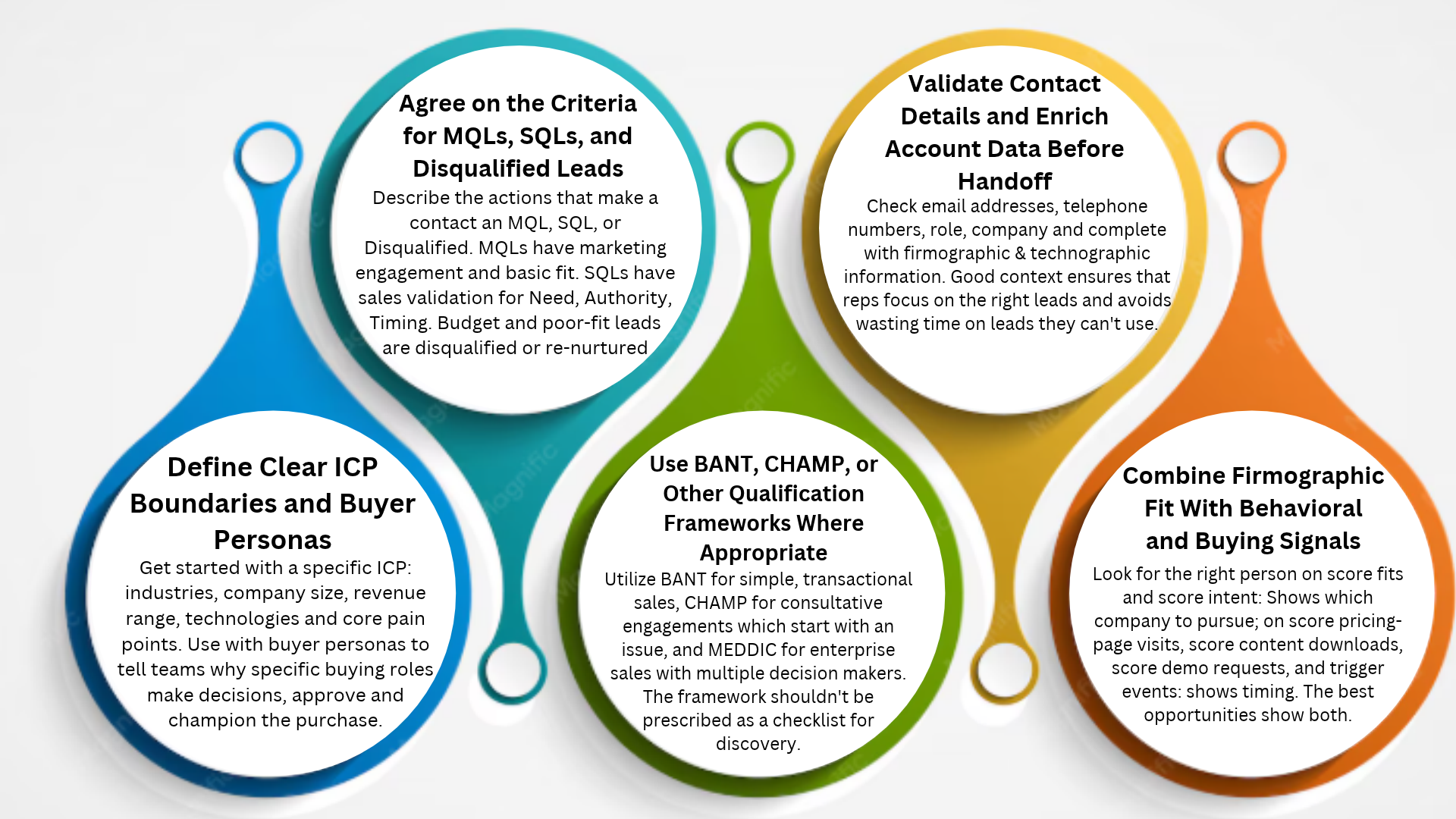
Create a Lead Rejection Taxonomy That Sales Teams Will Actually Use
Separate Permanent Disqualification From Temporary Nurturing Needs
Don’t classify unqualified leads as “no leads. Don’t say unqualified leads are rejected leads.” An outside contact without valid information, or from a competitor may be permanently disqualified, and a qualified buyer with no current project or budget may have to be nurtured. Salesforce also labels ‘nurture leads’ (leads with some future plans) and leads that have not yet been qualified. With these non-compatibility setups, you can’t remove future demand.
Standardize CRM Rejection Reasons Across Sales Teams
Take a concise list of main reasons and sub-reasons, including data quality, ICP mismatch, persona mismatch, timing and internal failing processes, etc. Feedback is standardized, takes a unified form across reps, campaigns, and vendors, and isn’t lost in free-format notes. Reducing the confusion between sales and marketing in the sales funnel is another benefit of having clear definitions for shared MQLs and SQLs.
Require Rejection Notes That Explain the Actual Problem
Allow rejection reasons and keep it simple! Record the main category, the subreason, supporting evidence, owner and the next action. For instance: “ICP mismatch: Company size: Less than the minimum”. This provides marketing and vendors with something to do besides “Not interested!”
Track Rejection Patterns by Campaign, Channel, and Lead Source
See all rejection percentages as well as rejection distribution by Campaign, Channel, Source, Vendor, Geography, and Persona. An invalid data rate that’s very high could be due to sourcing issues. If many of the rows are timing rejecting data, that could be an opportunity for nurture. Regularly measured campaigns assist teams to improve their future lead generation.
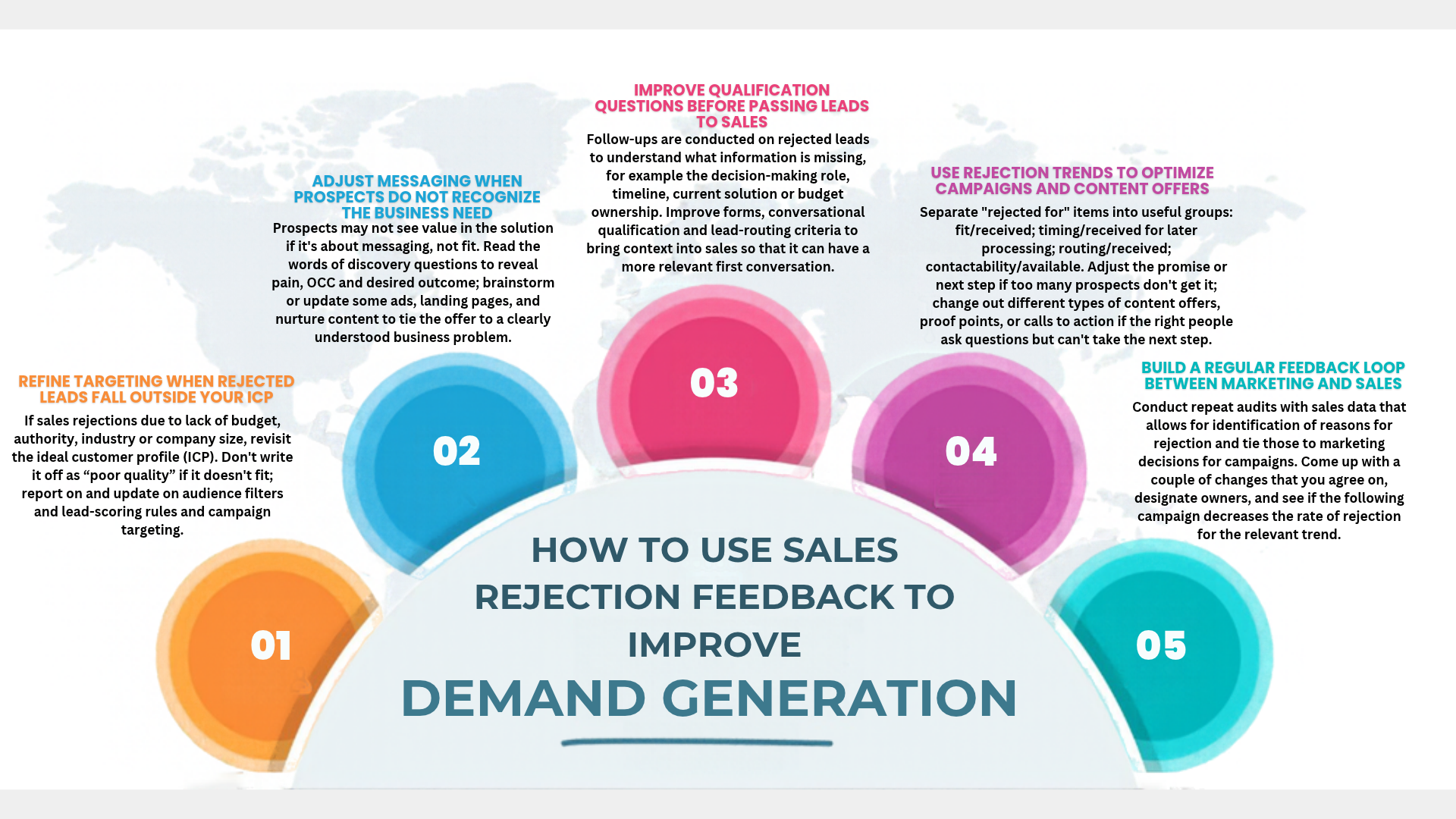
How to Use Sales Rejection Feedback to Improve Demand Generation
Conclusion: Turn Lead Rejection Data Into Better Qualification and Stronger Pipeline
Rejections are not a sign that there is a problem with the sales team; they might also indicate issues with targeting, data, intent, or handoff. If teams record the B2B lead rejection reasons. They will be able to spot trends in these reasons, refine lead qualification, and pass fewer low-quality leads to sales. Create a “qualified” definition to measure leads, streamline CRM rejection codes, ensure data is validated prior to handoff, and regularly check lead rejection trends. This will transform rejection into a viable framework for building more robust pipelines for lead conversion.

Author: IDBS Global
Turning Data into Demand, Fueling B2B Growth with Precision and Purpose.