
AEO for B2B: How to Get Cited in ChatGPT & Perplexity, Not Just Ranked on Google
Follow us

Buyers of B2B products and services no longer just rely on Google for product or vendor research, they’re also relying on search engine solutions. They engage with ChatGPT, Perplexity and Gemini and Google AI Overviews to define complex topics, compare providers, shortlist tools, and more. As a result, AEO in B2B marketing has become a new priority for marketers. AEO strategy helps your brand get featured as a trusted source when AI provides an answer. The goal isn’t to just rank the webpage. To make your content and general web presence accessible, trustworthy, helpful, and findable by AI systems. This implies that AI search visibility from Google is important even if it is no longer correlated with having a strong ranking. Best practices in AEO in B2B marketing will involve these elements: Answer-first content, original evidence, consistent brand information, credible third-party mentions and expert authority.
What Is AEO for B2B and How Is It Different From SEO?
What Does Answer Engine Optimization Actually Optimize For?
AEO (Answer Engine Optimization) turns that emphasis on its head. You’re no longer just trying to rank a page but to capture AI chatbots, such as ChatGPT, Gemini, and Perplexity, in a catch-and-respond manner. Now you are chasing a sale. You’re optimizing to provide the final answer. AEO optimizes for:
- Short answer to specific inquiries from buyers.
- Simple terms and sentences!
- Solid, substantive evidence (facts) and expert views.
- Consistent info relating to your business.
- Material that easily can be accurately quoted or summarised by AI.
Put another way, an AEO in B2B marketing strategy is about making your brand a part of the solutions, rather than simply the link below.
Why a #1 Google Ranking Does Not Guarantee an AI Citation
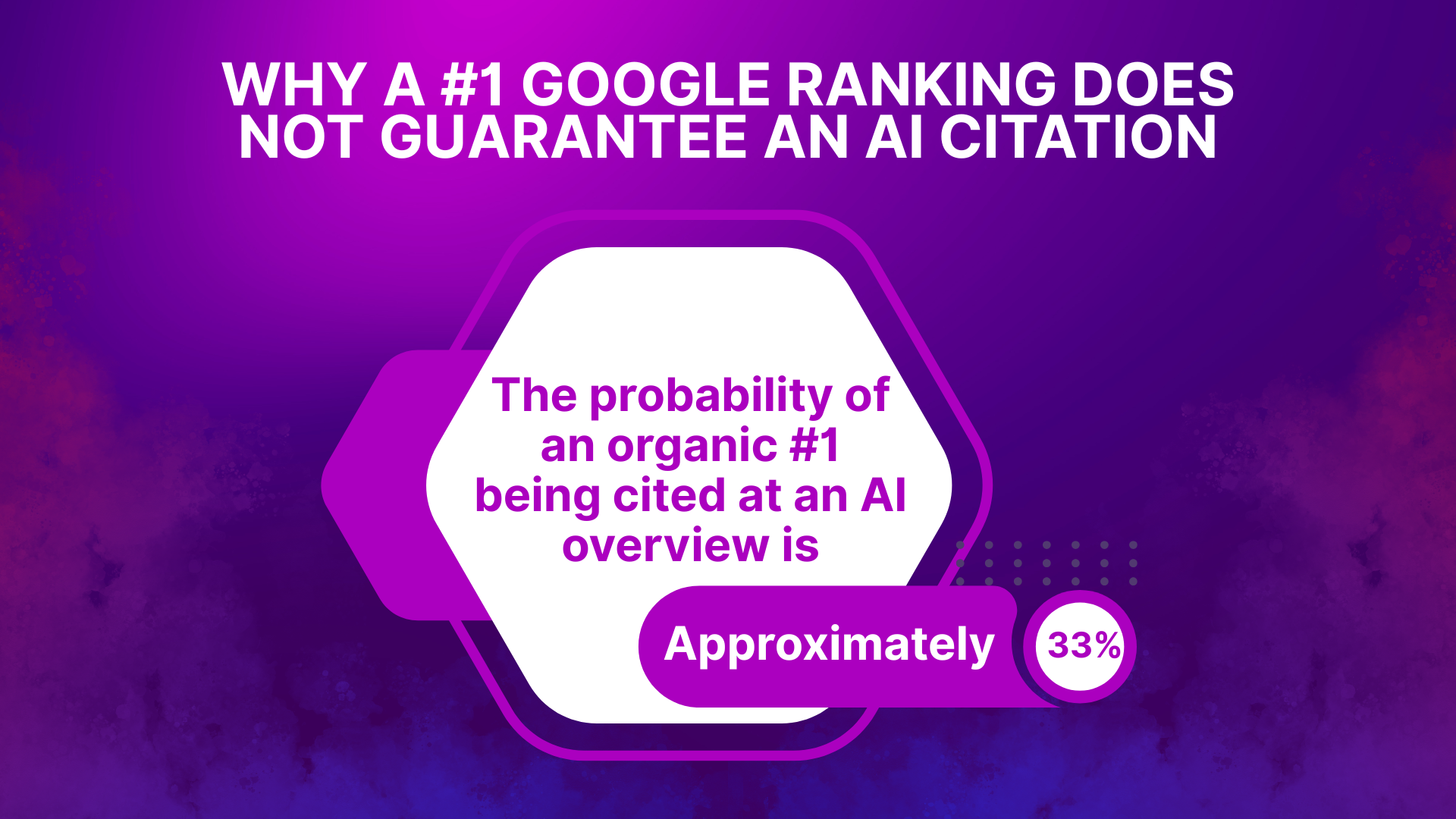
Generative engine optimization uses passage extraction, not the site as a whole. They prefer sites that provide a direct answer, are semantically complete and build web trust. Thereby, moving away from classical ranking signals.
How ChatGPT, Perplexity, Gemini, and AI Overviews Change B2B Search
Unlike simple search engines which just give a list of links, these answer platforms can draw in more than one page to answer a question. They can weigh up information from different vendors and compile and highlight consensus suggestions. The whole intent behind the AEO proposition is to make a brands’ content and online presence easily understandable. Also, it can be extracted and used by an AI answer box. In essence becoming something that the AI can directly refer to, cite and even recommend.
Why AEO Matters More for B2B Buyers in 2026
Buyers Are Asking AI Before They Visit Vendor Websites
Buyers are shifting their decision making from the vendors’ websites to an AI assistant. They determine and diagnose a business problem and compare the vendors within the market before visiting the relevant web pages or brand’s website. The vendors’ website still play a huge part in establishing trust, demonstrating authority and showing in detail a certain case study etc. However it no longer acts as an early part of the B2B buyer cycle. It is seen more as a final step where they are comparing the options that have been refined by AI, to make their final decision.
AI Can Shape the Shortlist Before a Sales Conversation Begins
Nowadays, B2B buyers are using generative AI tools such as ChatGPT, Claude, Perplexity etc. They use it to research problems, explore and compare options. Create vendor shortlists without ever talking to a company. Due to this clandestine phase of discovery, your consideration phase may already be locked in upstream by an algorithm. It happens even before your sales reps even walk into the room.
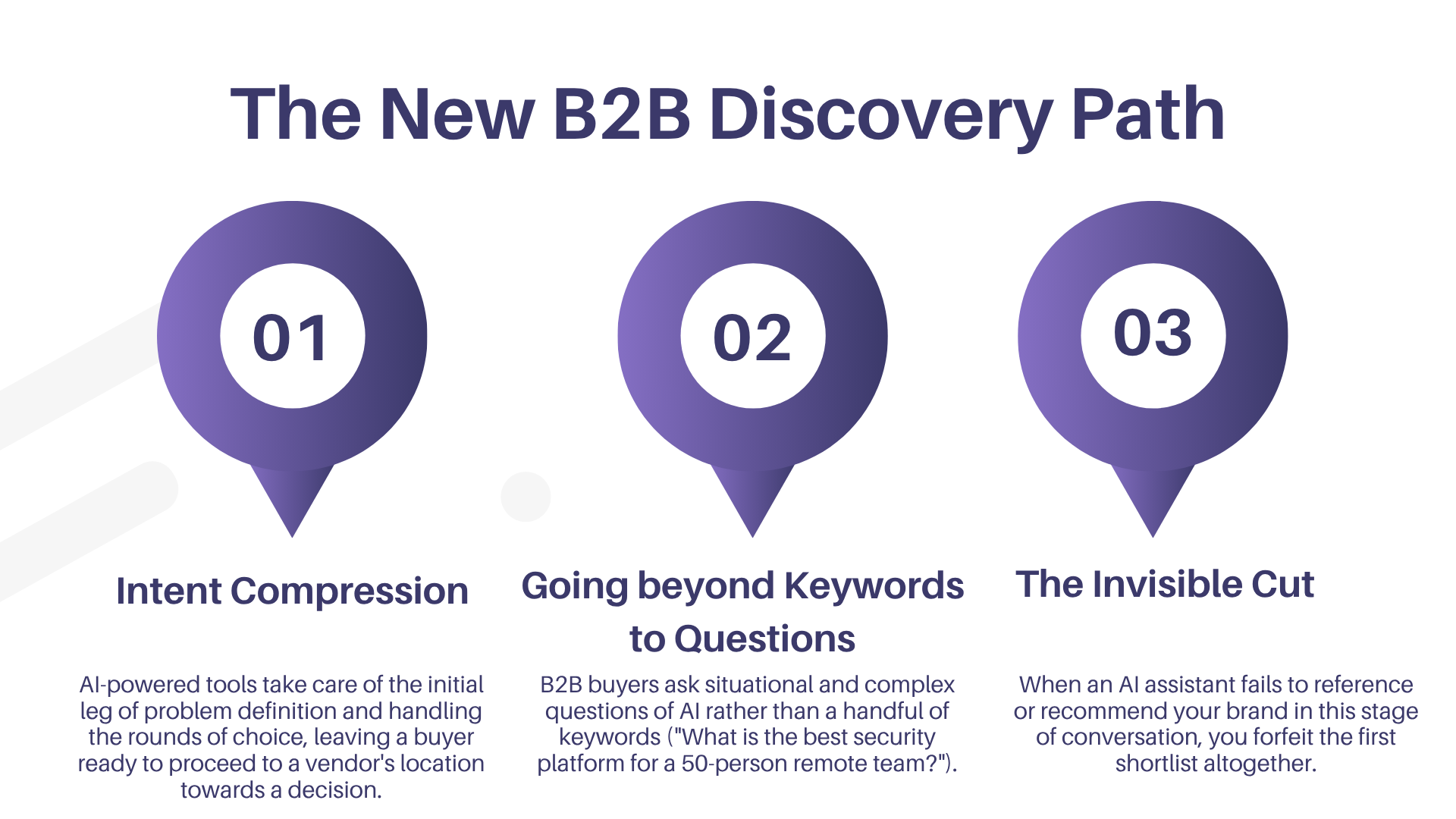
The New B2B Discovery Path
The B2B AEO Content Structure: From Question to Citation
Identify the Questions Your ICP Actually Asks AI
Start noting real prompts your Ideal Customer Profile (ICP) types into AI assistants. Get direct prompts from sales calls, support tickets or surrounding your category into your list. Double check them for the latest results. Use sources such as:
- Perplexity SEO
- ChatGPT SEO
- Google AI Overviews
Thus, it’s your AEO blueprint to have your AI content optimization for prompts your buyers are asking for, not keywords they might look for.
Group Questions by Awareness, Evaluation, and Decision Intent
Use the below buying stage objectives when organizing and grouping questions:
- Awareness (problem learning)
- Evaluation (solution comparing)
- Decision (ready to transact)
Organizing by intent prevents content overlap, helps you allocate your pages and stage of buyer journey. Thereby, signals topical authority for AI engines looking for answers by stage.
Build One Clear Answer Around Each Important Question
Each page should start with a clear, well-considered answer. This is well expressed in the first paragraph and then give supporting context in the following paragraphs. Keep your sentences short. Provide bullet points, question-form subheadings, and numbered paragraphs. So AI can easily pick out your response and copy and paste it.
Add Supporting Data, Examples, and First-Hand Expertise
Include original data, case studies, named entities, and quotes from experts to support each answer. Creating claims that provide the context and evidence needed supports greater trust and citation rates across AI platforms.
Link Related Answers Into a Strong Topic Cluster
Link individual answer pages back to a central pillar post with two way links so as to build thematic clusters of topical authority. It will make AI identify your website as the all-in-one source of information on the topic.
Keep the Page Focused on One Search Intent
All pages should answer one question, and should not attempt to be a ‘clue’ to a search engine or leave the user ‘hanging’. Therefore, dedicated pages with specific focused content perform well and receive more citations in AI-generated answers.
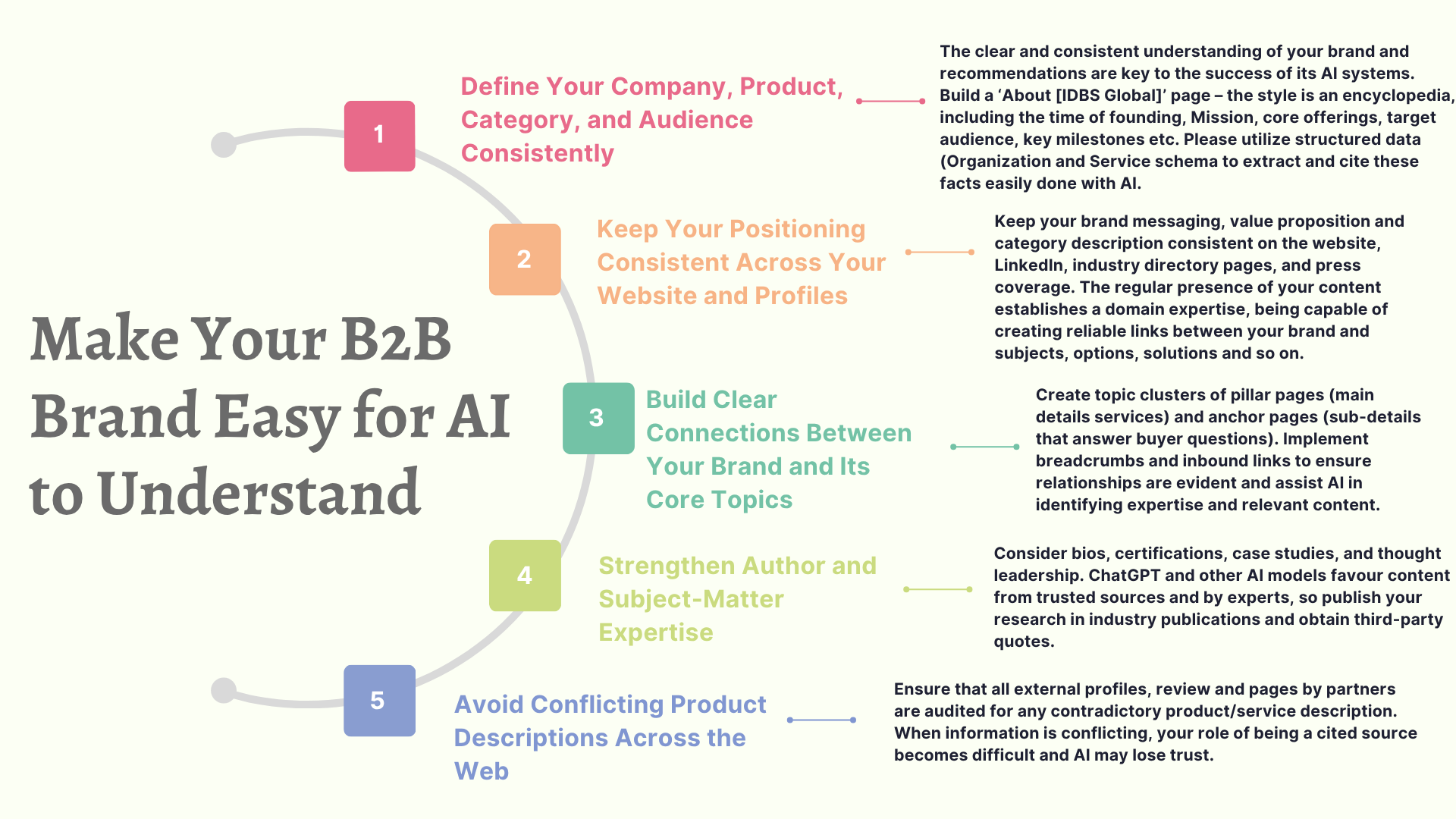
Make Your B2B Brand Easy for AI to Understand
How AI Engines Decide Which B2B Sources to Use
1. Authority for Source of Content: The search engines rely on a “source authority” score. It shows how reliably a web page’s author stands by what they say. It uses the reputation of the domain name in a general sense.
2. Developing Authority: Authority is built through citations on respected sites, mentions from trusted sources, proven experience in a specific field and, generally, by adhering to Google’s E-E-A-T concept.
3. Authenticity: Verified experts publishing content is given higher weight than anonymous writings, where authority is also evaluated by engine analysis of biography/author profiles.
4. Validation by Corroboration: Those claims which are independently confirmed by more than one source are ranked higher because such corroborate sources increase the likelihood of authority.
5. Content Up-to-date: Current content is considered and cited more favorably, particularly those related to rapidly developing topics. It is ranked higher by engines as being more authority-based.
6. Authoritative Brand: Search Engines will validate claims against other sources which will cause it to prioritize content to the extent it must be corroborated by authoritative sources across own domains to remain trustworthy.
Build Answer-First Content That AI Can Actually Extract
1. AI engines rank answers to explicit questions; direct, to-the-point statements are favored in the first sentence of the content. Simple answers in the first sentence should be written before expanding in order to make them quotable.
2. Use clear and appropriate headings to indicate the structure. H2, H3 clearly define where a sentence and its answer begins. Witty headings are not favorable for the AI engines.
3. Be specific; generic statements don’t get cited. The more detail that can be attributed to the content, such as numerical results or features, the more likely it is to be extracted.
4. Content must be present on indexable webpages. AI cannot deal with PDFs or walled-off content. So all valuable material such as product guides must be available to read freely.
5. Implement schema markup: This allows machines to read your content and makes information more structured. So that AI engines can find the specific information it is looking for, and in turn cite your page.
6. AI engines favor reputable sites. Due to Google’s E-E-A-T criteria, it seems important for content authors and their expertise to be visible on your site. Use names of authors and credentials to gain their trust.
7. If you are using consistent terminology across your site, you need to have clear canonical names for your products and services. It assists AI engines in not getting confused by subtle variations.
Why Third-Party Sources Can Make or Break B2B AEO
Google isn’t only looking at your website. AI is combining online news articles, professional content, online directories, and product review websites. It also combines many online conversations on platforms like LinkedIn, Reddit and YouTube, including discussions found in online forums. Create your brand’s authority by:
- Contributing as a go-to professional and industry writer for a popular online publication.
- Writing honest, customer-focused stories that have real results.
- Seeking out honest review platforms like G2. Be a helpful contributor to conversations in LinkedIn groups and on Reddit.
- Demonstrating your product in how-to, explanatory YouTube videos.
- Show a consistent company profile and website links on all online profiles outside of your website.
Don’t stop at just backlinking. Effective AEO will create an entire material of references confirming your business.
Use Data and Original Insights to Give AI Something Worth Citing
Rather than choosing the best relevant sources, AI citation selection relies heavily on picking out risk free, reliable sources, such as original research and sources that are clearly attributed to individuals. It’s not surprising given Yext data for original research, of the nearly 17.2 million citations, original research sites have an overall Citation Advantage of 4.31 versus other citation sites. AI engines revisit data intensive, reliable sites many times for each keyword too, which increases their advantage further.
Common AEO Mistakes B2B Marketing Teams Should Avoid
Mistake 1: Inaccurate data (hallucinations from AI)
GenAI is prone to create false data points (with hallucination levels from 33-48%). These can be very disruptive for B2B buyers who expect accurate information from you.
Solution: Every customer-facing content must go through a “Human-in-the-loop” workflow to ensure an SME check is in place and include prompts reminding AI to add only proven statistics.
Mistake 2: Off-brand messaging
AI has no context of your brand voice and this may result in a brand message that lacks consistency.
Solution: A very detailed brand voice guide may be provided to the AI.
Mistake 3: Data privacy risks
The information that is Fed into GenAI is proprietary data of your business which can get compromized.
Solution: Clearly define what you should not feed to the GenAI and make your employees aware about the data privacy aspects.
Mistake 4: Overreliance on AI
With overdependence on AI, your marketing may become too generic.
Solution: Implement a framework where humans lead the strategy, AI supports to draft.
Mistake 5: Legal and ethical issues
There is a chance that AI might copy copyrighted content and thus it could get misused for your business.
Solution: Always make checks on the generated content for plagiarism before publishing.
AEO vs. SEO: Should B2B Companies Choose One?
| Criterion | SEO (Search Engine Optimization) | AEO (Answer Engine Optimization) |
| Primary goal | Drive users to owned web properties | Earn inclusion in direct answers and AI-generated responses |
| Main user action | Click, visit, compare, convert | Read, absorb, remember, shortlist |
| Core focus | Rankings, search demand, crawlability, page authority | Extractability, semantic clarity, answer quality, entity relevance |
| Key tactics | Technical SEO, keyword targeting, internal links, backlinks | Structured data, concise answers, question-led formatting, entity clarity |
| Main content formats | Landing pages, product pages, blog posts, comparison pages | FAQs, definitions, summaries, answer blocks, expert explainers |
| Success metrics | Traffic, rankings, CTR, conversions | Citation frequency, answer visibility, mention quality, AI share of voice |
| Best funnel fit | Mid-funnel to bottom-funnel | Early-funnel to mid-funnel |
| Business value | Captures demand and converts it on owned channels | Shapes perception and authority before buyers visit your site |
Conclusion: B2B Marketing Has a New Discovery Layer
AEO is revolutionizing B2B brands. Sellers are now simply being asked to use AI tools to define categories, use comparisons, validate claims, and suggest solutions in advance of sales engagement. Buyers are increasingly requesting AI tools to tell them what it’s about, make comparisons with vendors, validate claims and suggest solutions before they engage with sales. Your brand therefore needs to be communicated easily to both human and machine. It is simple; the process is:
Buyer Questions → Answer-First Content → Evidence → Entity Clarity → Third-Party Authority → AI Citations → Brand Visibility → Pipeline
It is evident that the focus is on AEO in B2B marketing, not on gaining the attention of ChatGPT or keyword stuffing! It’s about becoming one of the most transparent, trustworthy, and accessible sources when there are AI systems available. It is because it wants to solve the questions your buyers are already asking. Base B2B SEO as your top priority. Include answers that will be focused, insights that are original, expert voices, brand information that has been consistent, and external validation. The strategy can enhance your company move from being searched to being recommended during significant buying choices over time.

Author: IDBS Global
Turning Data into Demand, Fueling B2B Growth with Precision and Purpose.