
ICP vs. Buyer Persona vs. Buying Committee: Which Model Should Drive Your Targeting?
Follow us

When you quit thinking about every production opportunity as your audience, you can begin B2B targeting. The ideal customer profile, buyer personas, and buying committee answers three questions: which companies to go after, which people to target, and who decides the buying.
There is no need to choose between ICP and buyer persona; it’s a conversation about preference setting. It isn’t an ICP vs buyer persona situation; it’s an ICP vs a preferring ICP situation. You can identify organizations that would benefit from your solution by creating an ICP, then reach out to people in those organizations via buyer personas. The next level, buying committee mapping, provides more detail about the interaction of buying committee members involved in a complex purchase.
A typical B2B decision doesn’t involve one person. All three are necessary for the best targeting – ICP to select your target market and accounts. Use personas to create engagement variations. Whereas, committee mapping to adjust and smoothly manage deals with multiple stakeholders.
ICP vs. Buyer Persona vs. Buying Committee: What Should You Use?
All three are useful, and best utilized together. ICPs to target companies, buyer personas to guide messaging to individuals and buying committee mapping to engage all stakeholders of complex B2B transactions. ICPs are centered on the best-fitting organization, whereas personas are centered on the individuals who have an impact in its purchasing decisions.
Use ICP for Account Selection
An ICP describes the type of business that’s most likely to buy from you and get good results for themselves. Conduct audience segmentation and target high-fit accounts using firmographics, industry, company size, locations, budget with technographics capabilities and avoid wasting sales resources on poor-fit leads.
Use Buyer Personas for Messaging and Engagement
The target accounts discussed will include a buyer persona for the decision makers within that account, whether the CMO, an IT Director, or a VP of Marketing. Create messages to be more compelling based on their role-specific objectives, concerns, and needs. Use communication types to make the ads, content, emails, and sales calls more relevant.
Use Buying Committee Mapping for Multi-Stakeholder Deals
For larger B2B transactions, there will be only one persona, if any, that fits the bill. Identify the entire buying team (economic buyer, champion, technical evaluator, end user, and influencer). Send each person content to address their unique concerns and decision factors. This helps to avoid deadlocks occurring if a stakeholder brings an impasse by not taking action.
Combine All Three for Account-Based B2B Marketing
Use an ICP to choose the accounts, customize your outreach with personas, and map your committee to multi-thread your outreach. This cross-functional strategy ensures marketing and sales are aligned, increases conversions, is faster to sell and maximizes the ABM ROI.
ICP vs. Buyer Persona: What Is the Difference?
| Aspect | Ideal Customer Profile (ICP) | Buyer Persona |
| Focus | The right company | The right person within the company |
| Purpose | Identify high-fit accounts | Understand and engage decision-makers and influencers |
| Key Attributes | Industry, company size, location, budget, tech stack | Job role, goals, pain points, communication preferences |
| Primary Use Cases | Market segmentation, ABM, lead qualification | Content creation, sales messaging, and campaign personalization |
| Benefit | Ensures you’re targeting the best-fit organizations | Helps you resonate with real people who drive buying decisions |
| Works Best For | Targeting accounts at the organizational level | Personalizing outreach to individuals within those accounts |
| Example Role | A SaaS company targeting mid-sized tech firms in the US | A VP of Marketing at those tech firms |
ICP Defines “Which Companies,” While Personas Define “Which People”
ICP is a profile created based on three sources of data: firmographics, technographics, budget, industry, company size and buying behavior that are at account level. It enables cross-departmental coordination between sales and marketing to identify high-fit accounts, qualify leads and target ABM campaigns. IIt aims for the highest revenue potential accounts. Unlike a buyer persona, it is an individual’s idea of a person who is a decision maker or influence on a purchase. For example, a CMO, an IT Director or a VP of Marketing. It identifies their intent, objective, pain points, motivations, preferred communication style and more, allowing more meaningful content, outreach, and sales conversations.
When Should You Use an ICP in B2B Targeting?
Identify Companies That Match Your Best Customers
Firstly, examine some of your highest-value customers – those that retain the most, make repeat purchases, refer customers to you and have a healthy, long-term value. Discover a strategy for customer segmentation by identifying common attributes like industry, company size, growth stage, location, revenue, and business problems.
Use Firmographic and Technographic Criteria to Define Account Fit
Firmographic data is used, including number of employees, annual revenue, industry, geographic and growth potential. Consider technographic factors such as does your solution integrate seamlessly with the technology already utilized by an account. These can be the CRM, marketing automation, cloud or analytics tools they have in place?
Connect ICP Criteria to Account-Based Marketing and Demand Generation
Launched and managed the ABM efforts in the ICP using account prioritizations, customized campaign and sales/marketing messaging. For demand generation, it’s useful in crafting content (and offers!) that resonate with prospects’:
- Pain points
- Goals
- Buying triggers
These are important for those prospects that are most fit for the business.
Use ICPs to Prioritize Accounts Before Starting Outreach
Engage with scores and segments before outreach to ensure that reps are prioritizing the best possibilities during outreach efforts. This enhances their sales productivity, decreases the selling period, boosts individuality, and cuts down on their sourced spent on the poor match leads.
When Does a Buyer Persona Become More Important?
Understand Roles, Responsibilities, and Business Pain Points
Strong personas are detailed enough to account for a buyer’s daily responsibilities, professional challenges, definition of success and pressures to make a decision. This helps in sales and market segmentation for targeting the correct leads and discuss issues that really impact their job.
Adapt Messaging to Different Stakeholders
When it comes to B2B purchases, the core members of the purchase team are a decision maker, influencers, end users, and internal champions. Executives care about business results, influencers care about knowledge, end users care about ease of use and functionality.
Match Content to Each Persona’s Role in the Buyer Journey
Optimize for the persona and stage of the journey (e.g. case studies for decision makers and product demos for end users and conversation guides for champions). Personalized engagement is important; most business buyers are more likely to buy when their objective is understood.
Why ICP and Buyer Persona Work Better Together
Start With the Right Account, Then Identify the Right People
Start with your ICP including industry, company size, revenue, growth stage, technology stack and budget. This should be done with the accounts that will most benefit your solution at the top of your priority list. Next, create personas of the roles that exist within those accounts.
Connect Account Fit With Individual Buyer Needs
While an account might be appropriate to all three ICP groups, the goal, objections and success metrics for an account could be different. It can be different for a marketing leader, an operations manager, or a finance stakeholder. Personas convert account fit to appropriate role-specific communication.
Build More Relevant B2B Campaigns With Both Models
Identify and target the right accounts in ICP data and tailor content themes, ad copy, sales talk tracks and channels based on personas. This makes it easier to do outreach to the general population, and helps make engagement better.
Where Does the Buying Committee Fit?
Why B2B Purchases Rarely Involve One Decision-Maker
The typical B2B decision makers have a budget, technical fit, daily usage, security, legal terms, and strategic considerations. This is why it’s possible to have a promising deal after a demo but go flat after someone late with the finance guy, security guy, or incumbent from a specific tool comes in.
Map Champions, Decision-Makers, Influencers, and Blockers
Define roles – not job titles. Define and understand:
- Internal champion
- Economic buyer
- Technical evaluator
- End user
- Procurement
- Legal
- Executive sponsor
- Blockers
These are the ones who bring status quo arguments.
Create Stakeholder-Specific Messaging Within the Same Target Account
Different evidence required for each job. Give the payback formula, integration, and risk document of IT security. It also includes end user workflow alignment and an internal story to be told to end users by the champions.
Use Buying Committee Insights to Understand Account-Level Engagement
Identify involved stakeholders, their attitudes and the roles lacking at each deal phase. When there is a proposal with no budget owner, or a deal that requires 1 champion, it is an indicator of increased risk, and low account coverage.
How to Build a Targeting Framework Around All Three Models
Define Your Ideal Accounts
First look at customer segments that won’t open and see the patterns of customers — industry, company size, revenue band, geography, and tech stack. This means it develops an ICP that focuses on those accounts that have a greater likelihood of converting and providing long-term value.
Identify the Personas Within Those Accounts
Develop 3-5 different personas based on their roles likely to become involved in deals: end users, champions/supervisors, and executive economic buyers. Not only job titles, but also donors’ goals, KPIs, donators’ pains, their triggers to buy, their objections, their preferred information sources.
Map Their Roles Across the B2B Buying Journey
Identify stakeholders according to their role, influence, stance and path to the project, not by job title. Extend the deal beyond the champions and into other key stakeholders like technical evaluators, economic buyers, procurement, legal staff, and blockers as it moves forward.
Layer Buyer Intent and Engagement Signals Into Your Targeting
Define in-market accounts and undiscovered committee members using intent surges, visits to websites and content downloads. Also, mentions of the organization by phone or job changes. Target outreach during these signs of active research, and customize messaging to each persona and their priorities.
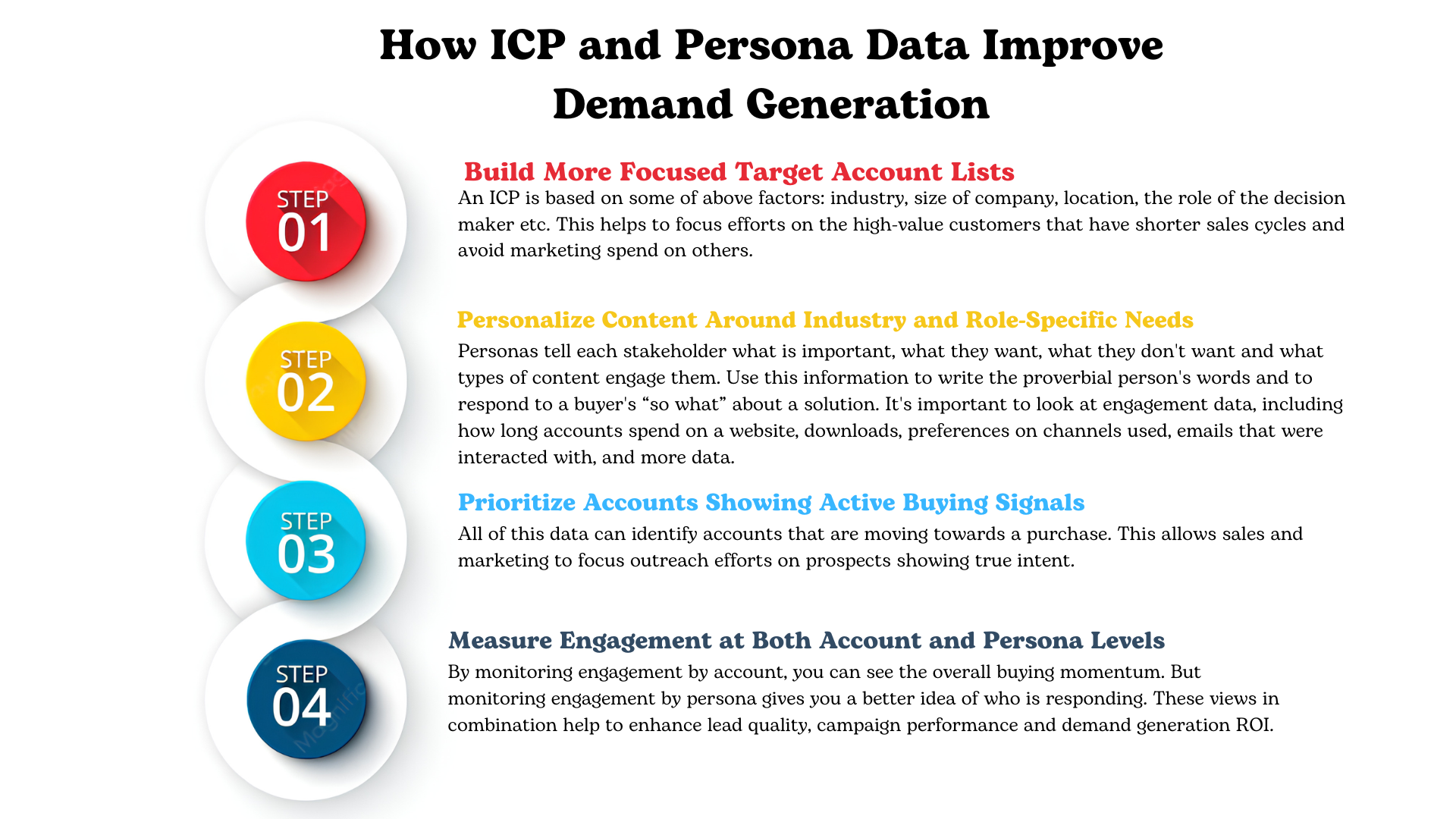
How ICP and Persona Data Improve Demand Generation
Conclusion: Use ICP to Find the Account and Personas to Reach the People
Adopting only one of the two types, ICP vs buyer persona, is not a condition for knowing which is right or what ICP is. Using ICPs will help you figure out which companies you should approach. Buyer personas will help you target the right individuals. Whereas, buying committee mapping will help you navigate complicated multi-stakeholder buying decisions. The first thing you have to do is identify your ICP and focus on bringing in accounts that are most likely to be valuable for a long period of time. Next, personalize messaging, content and outreach based on stakeholder goals and concerns, based on buyer personas. Finally, include a complete buying committee, involve several stakeholders and track account level engagement.
The entire three models create more precise, relevant and revenue-focused B2B targeting.

Author: IDBS Global
Turning Data into Demand, Fueling B2B Growth with Precision and Purpose.