
High-Volume B2B Lead Generation: How to Reduce CPL Without Sacrificing Lead Quality
Follow us

Having a high volume of B2B leads can reduce your cost per lead (CPL) only if you benefit from increased efficiency, not more leads that aren’t a good fit for your business. It isn’t about getting more leads, it’s about getting more qualified leads with them being transferred to a larger number. It is crucial to have an accurate ICP, accurate data and sales aligned qualification parameters in place. Since the CPL is just a number; without a good ICP and low conversion rates it can be misleading. This guide takes a practical look at how to lower CPL by scaling through technology efficiencies, better communication and disciplined control. Thereby, without compromising the pipeline you’re relying on to fuel your B2B lead generation efforts.
How Increasing Lead Volume Reduces Cost Per Lead Through Economies of Scale
Access to Larger Volume Optimizes Prospect Datasets With Direct Numbers
With more prospect data, you can be more efficient with your targeting and outreach. As it identifies more high-intent contacts with direct phone numbers. Campaigns spend less impressions and calls on leads who lack a verified, reachable leads. This reduces CPL as less time and money are being spent on non-convertable prospects to a sale. With bigger data sets, you get the added value of segmentation, lookalike modeling, and real-time optimization based on actual responses. This results in a healthier lead pipeline, better conversations, lower costs of acquisition, without negatively impacting lead quality.
Spreading Fixed Operational Costs Across a Larger Lead Volume
There are fixed lead generation costs like lead volume subscription, campaign setup, creative production and management time which are relatively stable as the number of leads increases. Rather than 250, 500 leads originate from the same infrastructure, the cost per lead drops, which helps lower the CPL without losing the spend.
Reducing Average Cost Through Better Resource and Platform Utilization
A streamlined technology stack and auto-powered answering, paired with AI-powered prospecting tools extract more leads from fewer tools. Most people working in sales spend a huge amount of time jumping around between uncoordinated platforms. So when you improve the utilization of an existing platform, it also boosts productivity without a corresponding rise in expense.
Increasing Team Productivity Without Increasing Costs at the Same Rate
Automation, lead scoring and repetitive drip campaigns help more prospects be managed by the same group. AI-powered personalization and qualification can save them tedious research and ensure reps work faster on more qualified leads. Thereby increasing productivity at a faster rate than labor expenses.
Understanding the Relationship Between Lead Volume and Average CPL
To understand the relationship between Lead Volume and Average CPL, one should know to calculate it: The formula is
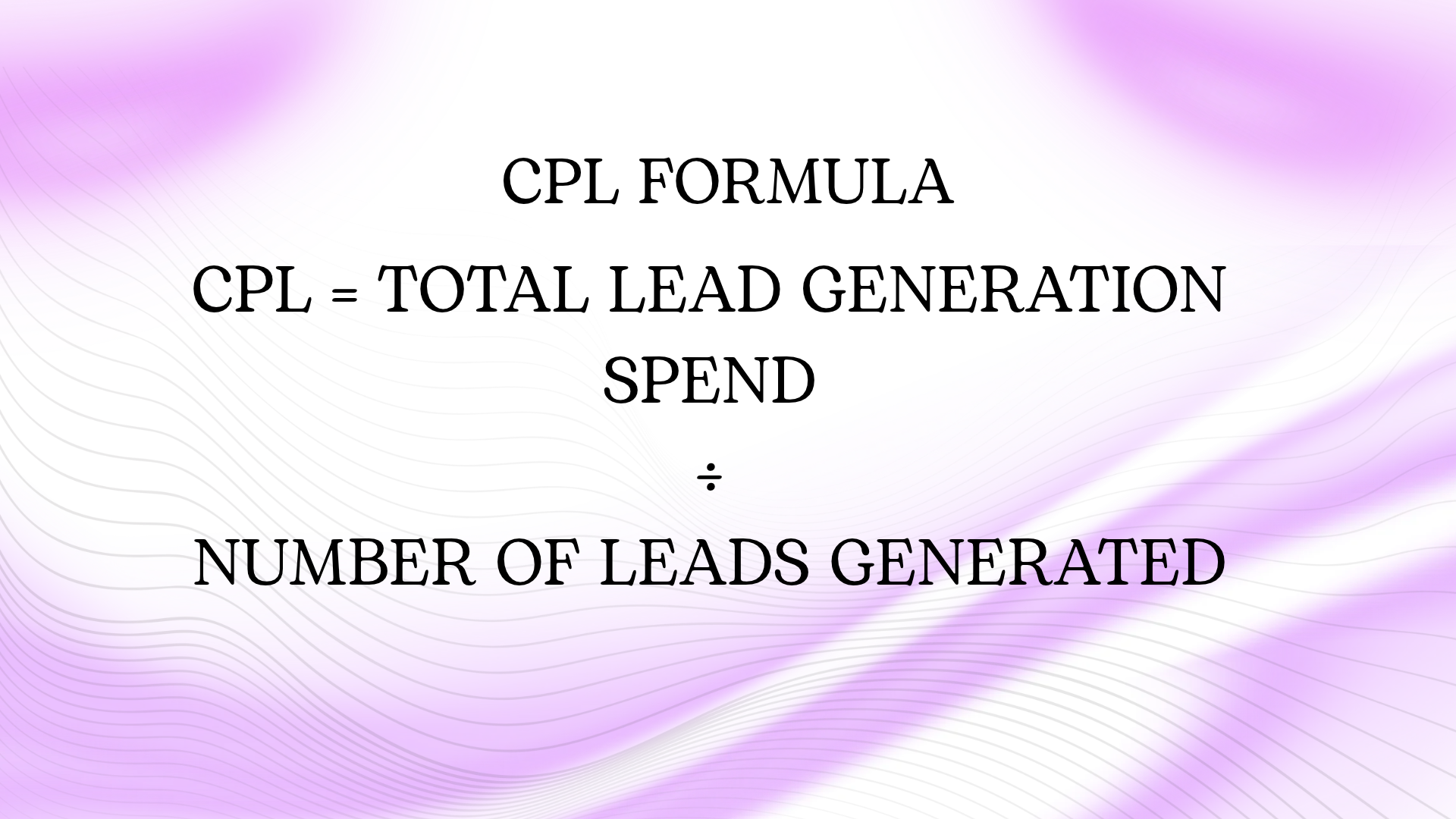
CPL = Total lead generation spend ÷ Number of leads generated
For example:
CPL is enhanced when additional leads are acquired at less than the current average. For example, if a $1,000 monthly budget produces 100 leads, CPL is $10.
Whereas, producing 200 leads for $1,400 lowers CPL to about $7. Comparatively, the second example benefits from distributing costs and better conversion efficiency.
Why Higher Volume Only Reduces CPL When Lead Quality Remains Consistent
Sometimes lower cost leads are not higher quality leads. Larger scale and decreased friction can result in a lower CPL but generate not qualified leads and aren’t able to be converted into actual customers. It’s more about the right leads, qualified messaging and sales to marketing alignment.
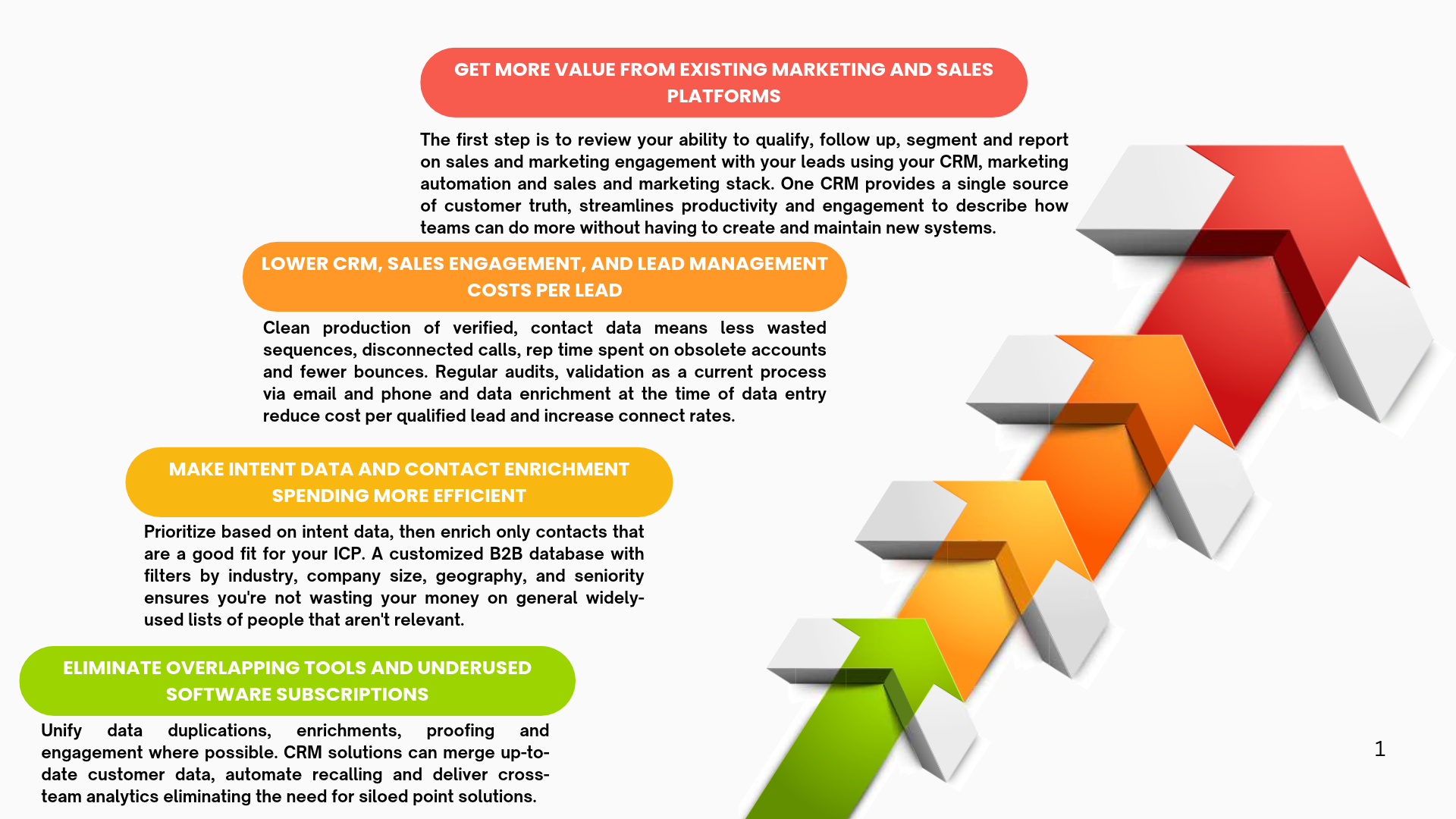
Reduce Technology, CRM, and B2B Data Costs as You Scale
Optimize Communication Costs Across Calling, Email, and Messaging
Reduce Calling Costs Through Better Utilization and Volume Pricing
To reduce cost during demand generation, automatically switch to cheaper call routes, bypass premium rates, or cut labour, equipment and maintenance costs with least-cost routing. VoIP and cloud-based systems automatically switch calls to the most cost-efficient route. Analyze calls and international trends to ensure priced plans, carrier contracts and routing rules reflect real call activity.
Lower Messaging Costs With More Relevant Prospect Engagement
Do not send SMS messages to any numbers that have not been engaged. It is fine to keep SMS characters under 160 to avoid multi-part billing. Deliverability is enhanced and fewer messages are wasted on the wrong recipients, by sending directly to the carrier and optimizing message delivery timing.
Distribute Email Platform Costs Across Larger Qualified Campaigns
If you want to nurture a lot of contacts, you can combine, automate, and qualify them for better platforms or distribution “media.” This narrows and “blurs” the costs of platform fees for more meaningful for outreach efforts. All relevant content will ensure engagement and reduce the cost per response.
Measure Communication Spending Against Qualified Responses
In B2B lead generation process, know your cost per call, message, email and especially qualified response or conversion. Apply these yardsticks to shift spending from under-performing channels to channels that are bringing in revenue.
Scale Content Production, Team Productivity, and AI Resources
Reuse Content Assets Across Multiple Campaigns and Buyer Journeys
Instead of having to make all assets from the start, AI can spot outdated content, update the stats and adapt content for various platforms and consumer groups. Dynamic creative optimization also allows you to create ad variants using a common collection of copy, images, calls to action and video components.
While others have to deal with lead generation strategies, creativity, and final quality control, AI can help existing teams improve their:
- Drafting
- Editing
- Personalization
- Distribution processes
- Time-saving
Increase Team Output Without Proportionately Increasing Headcount
Generative AI can create several content variations in a short time and UGC can be used to innovate with authentic, higher volume content without an increase in workforce. Human-in-the-loop review remains critical to ensuring factual accuracy and brand consistency, with structured AI workflows. This results in higher output and reduced production time for enterprises.
Use AI to Reduce Repetitive Research and Campaign Operations
AI can crawl industry, competitor, customer questions and engagement metrics to uncover topics, content holes and distribution opportunities. It can also automate scheduling, localization, publishing, performance analysis over the channels etc. Always utilize the power of AI as a tool and not as the final say; set clear review guidelines to avoid hallucinations, plagiarism and off-brand messaging.
Balance Automation Savings With Human Quality Control
While outreach can be scaled quickly with automation, so can errors. Create human review settings for sending and receiving messages, changes to target lists, compliance settings and the rules for routing leads. The aim is to ensure efficient scale automation of repetitive tasks with human oversight of high-value decision making.
Manage Infrastructure and Administrative Costs as Lead Volume Grows
Improve Infrastructure Utilization Across Campaign Operations
Optimize on the cloud, right-size instances, eliminate idle environments, and leverage tagging to easily see compute and storage consumed by each campaign. Central control, allocation of tags to costs and notifications of expenditure anomalies are the three areas that Intercom recommends should be implemented; according to Hystax, 20-40% can be saved on infrastructure costs with the use of the identified native tools.
Distribute Administrative and Management Overhead Across More Leads
Track administrative expenses not only on a personnel (payroll) or tooling (expense) level, but per lead. Automate workflows, reporting and routine tasks, and streamline specialist tasks, allowing campaign managers to create better leads instead of automating the mundane. This allows for distribution of fixed overhead across a larger lead base and enhances the economics of the units.
Plan Capacity Before Additional Software, Staffing, or Infrastructure Is Needed
Discuss infrastructure expenses as a percentage of revenues and establish cut-off points for adding licenses, staff, and/or capacity. Focus on changes by savings per effort, negotiate vendor contracts at an early stage; establish a short-term forecast to not have unexpected costs due to growth.
How to Maintain Lead Quality While Increasing Volume
Keep ICP and Qualification Standards Consistent Across Campaigns
Apply consistent ICP/MQL/ SQL (for all media types), Webinars, syndication, outbound, and direct numbers, etc. This reduces the duplication of lead sales efforts yielding inconsistent handoffs and conversions since leads that qualify for one campaign will not qualify for another.
Build Contact Verification and Data Quality Checks Into the Process
There are multiple layers in the B2B lead generation process during contact verification and data quality checks. These are:
- Field validation: Validate required fields, email syntax, cell phone, country/state at capture to prevent unusable records in the field.
- Duplicate detection: When adding new match records to contacts and accounts to prevent overreach and inefficient duplication of contact effort.
- Email verification as well as verification via phone: Make sure emails are deliverable and contacts are active before they join nurture or sales sequences.
- Firmographic enrichment: Enrich only relevant attributes for the purpose of fit and routing which are industry, company size, revenue, role, and territory.
- Data standardization: All job titles, leads sources, company name and consent data fields must be standardized. It increases accuracy of scoring, de-duplication and reporting.
- Consent and compliance checks: Get the consent status, respect consumer opt-out, record consent in handoffs, provide audit trails for GDPR/CCPA requirements.
- Use a sizable number of amounts for higher lead quality: Select a large pool of qualified leads to drive better lead quality and sales performance and have a robust and expandable pipeline.
- Source level quality audits: Audit invalid, duplicate and bounce rates at source to look for bad data partners or campaigns.
Track Cost Per Accepted Lead Instead of Relying Only on CPL
CPL can offer low quality, non-expert volume. Find out how efficient each source is by dividing spend by leads sales accepts, measuring on conversions by acceptance, opportunity and closed-won.
Use Sales Feedback to Improve Targeting and Qualification
- Make a feedback loop that includes:
Recurring rule for sales to follow - Recording the reasons behind lead failure
- Conversion
- The need for nurture
Utilize those reasons to fine-tune ICP criteria, scores, channel mix, message and qualification procedures.
Conclusion: Scale Qualified Lead Generation Without Scaling Costs at the Same Rate
There are several opportunities to lower CPL in high-volume / high-intent B2B lead generation campaigns, and it’s not a matter of throwing money at it. It involves distributing fixed costs to qualified leads and creating a more efficient usage of the platform. It also involves negotiating cost-effective vendor deals, streamlining repetitive tasks, and ensuring lead quality throughout. Direct your efforts on cost per accepted lead and not just CPL, and then establish verification, compliance and sales feedback loops within your process. As your volume increases and ICP targeting is performed effectively, you can scale your B2B lead generation profitably while providing sales with a pipeline that can convert.

Author: IDBS Global
Turning Data into Demand, Fueling B2B Growth with Precision and Purpose.