
Why Generic Lead Generation Fails MSSPs and VARs and How Demand Gen Partners Build a Better Pipeline
Follow us

Managed Security Service Providers (MSSPs) and Value-Added Resellers (VARs) are among the most complex B2B arenas out there. Many, however, continue to use “hacks” for lead generation that yield quantity but fail to produce any real pipeline. The truth is, MSSP marketing need to generate leads in a different manner than regular B2B marketing.
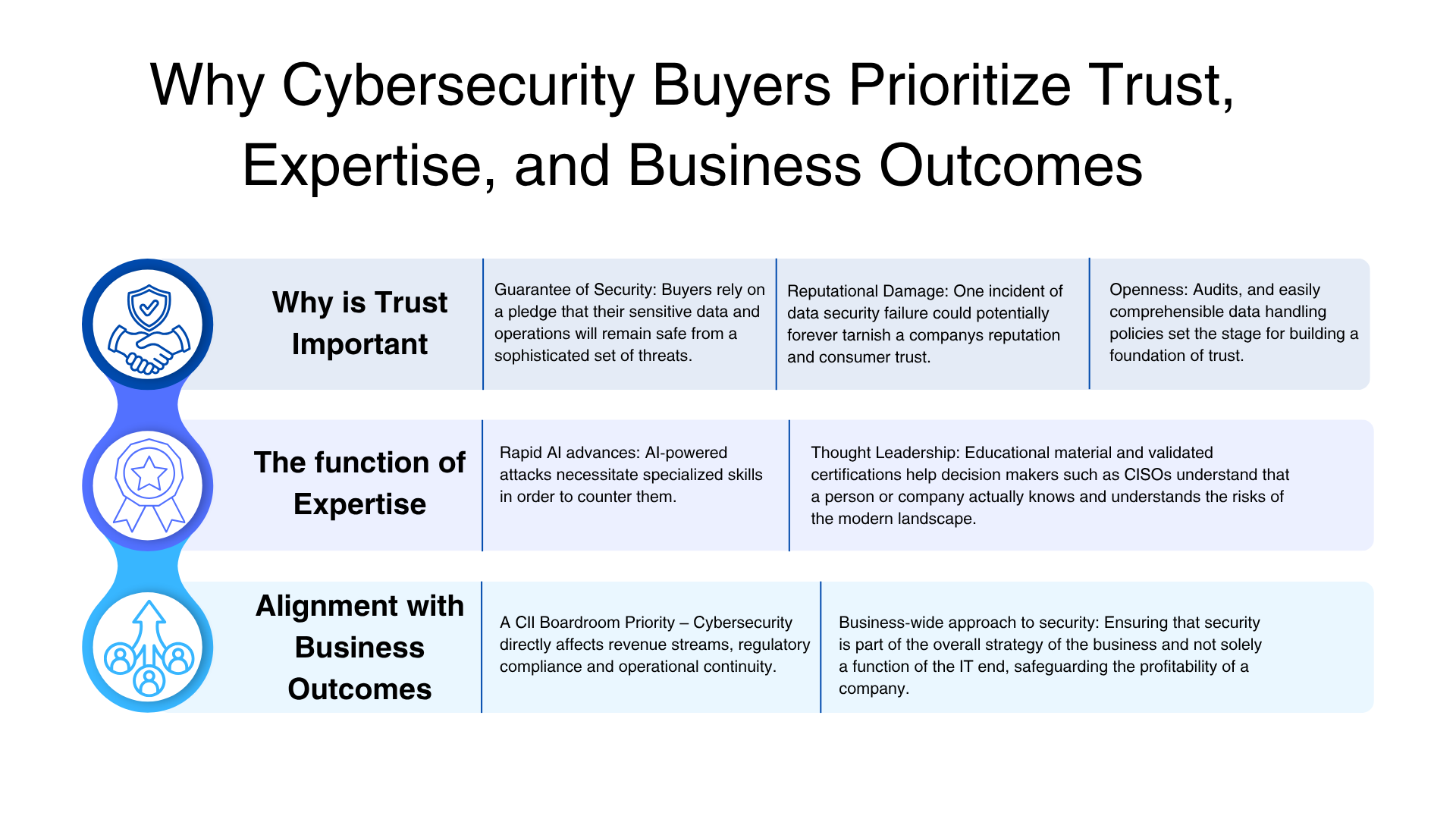
Cybersecurity consumers are not being motivated by generic lists, such as “broad targeting,” or paranoia or fear-based messaging. These opportunities focus on proven trust and credibility, along with tangible business results versus promises promoted through vendor marketing. That’s why demand generation for MSSPs is about proven accounts, buyer intent and content that addresses industry and tech problems.
This blog delves into why MSSPs and VARs waste opportunity in their pipeline. It is because of the need for generic lead generation and how demand generation partners create a stronger opportunity pipeline. From account verification to content syndication and prospective qualification, demand generation for MSSPs positions a clear trajectory from engagement to revenue.
Why Demand Generation for MSSPs and VARs Is Harder Than Traditional B2B Lead Generation
Why Cybersecurity Buyers Prioritize Trust, Expertise, and Business Outcomes
How Longer B2B Sales Cycles Make Poor-Quality Leads More Expensive
With longer B2B sales cycles, the value of poor quality leads goes up. It is due to their potential to cost teams of hours of selling time, marketing investment by low ROI, including buyers who never actually purchase.The time period that a business requires to close a sale after they first get in touch with a prospect is called a B2B sales cycle. As the length of time increases for an uncomfortable lead, the problems multiply!
Why MSP, MSSP, and VAR Accounts Are Difficult to Identify and Reach
| Provider | Primary role | How they work with customers | Best for |
| MSP | Provides a broad range of IT services to keep systems operational | Typically works under ongoing or multi-year managed services contracts | Organizations that need IT management, support, and operational expertise |
| MSSP | Delivers specialized cybersecurity services to protect systems, users, and data | Provides continuous security monitoring, threat management, and security strategy development | Organizations looking to strengthen cybersecurity, improve compliance, and reduce cyber risk |
| VAR | Sells and implements hardware and software solutions with added services | Usually operates on a transactional basis or through short-term implementation engagements | Organizations purchasing new hardware, software, or cloud solutions that require deployment and customization |
Why Generic Leads Are Not Working for MSPs, MSSPs, and VARs
Why Generic Contact Lists Fail to Show Genuine Technology Buying Intent
A generic contact list compacts all emails into a single list rather than allowing an accurate real-time determination of who is engaged in technology evaluation. It is not enough for MSPs, VARs and MSSP services to simply pull names from directories. They must have a prospect who is researching a security upgrade, cloud migration or compliance solution. Outreach targets cold audiences who have no interest in your CVS wasting sales cycles without intent information.
How Broad Targeting Creates Low-Value and Poor-Fit B2B Leads
Broad targeting can target every industry, every company, regardless of the size of their company. This strategy produces a lot of leads but with low conversion rates because the messaging doesn’t align with the specific pain points, such as budget, regulations, and so on. This leaves too many leads in your pipeline that are too far from being sales ready and need a lot more nurturing.
Why Purchased Contacts Rarely Match the Ideal Customer Profile
Commonly purchased contacts are missing some of the parameters that enable MSP alignment. These are company revenue, existing tech stack, decision-making authority, and more. These lists are focused on how many, rather than how relevant, and outreach is done “in relevance.” MSPs end up selling to contacts who have no authorizing authority nor are involved in any of the challenges that the solution addresses.
How Single-Contact Lead Generation Misses the Wider B2B Buying Committee
MSP sales cycles include several players with varying priorities that need to be addressed, such as CFOs, IT directors and end-users. The Single Contact strategy focuses on one person instead of the multi-person nature of B2B decision making. This dumbbell delays happen as the committee members are not engaged. It raises objections or even putting off approvals, increasing the sales time of a typical MSP transaction to more than 3–9 months.
Why Lead Volume Can Increase While Qualified Sales Pipeline Stays Flat
When targeting is indiscriminate, metrics, such as MQLs, are boosted by high volume of leads generated, without increasing SQL quality. There are plenty of leads that sales teams go after who are not in the top 10 percent intent. This disconnect has created a situation where there is seemingly more pipeline business. Yet in reality no implementation of any type is really happening. It is because the orchestration has been left behind to fall under the generic tactics.
How Demand Generation Partners Build and Convert a Verified Target Audience
Combining SIC Codes, Firmographics, Technographics, and Legacy Account Data
1. SIC/NAICS Codes: They designate the sector of the business in which the company functions, such as Software or Healthcare.
2. Firmographics: It offer information about the company’s size, such as number of employees, size, revenue and location.
3. Technographics: This considers the company’s back-end digitally, thinking about tracking software being implemented or the IT structure of a company.
4. Legacy account data: Any data relating to the company throughout history regarding the relationship it has with your business, e.g., CRM data regarding previously purchased items, the lifetime value of a customer
Using Account Research and Voice Calling to Verify MSP, MSSP, and VAR Accounts
To validate an MSP, MSSP, and VAR account, it requires joining digital footprints with real human validation. This provides two levels of filtering to weed out any fake leads and ensures the correct type of account.
Identifying Decision-Makers and Building Verified B2B Prospect Lists
There are 5 basic stages the B2B teams will adhere to, in order to create, establish, and prioritize their prospect lists:
- Set revenue-based ICP criteria grounded on win-loss analysis.
- Maintain a prospecting database with robust data governance capabilities.
- Utilize a segmentation strategy keyed to purchasing behavior and an org chart.
- Grade and rank accounts against the strength of a firmographic match fit; buyer actions and purchase indicators.
- Repeatedly measure the outcome of conversion rates and re-evaluate the tiering strategy.
Using Buyer Intent and Account Engagement to Prioritize Relevant Prospects
Buyer intent data and account engagement allow sales and marketing to identify in-market prospects early, and target accounts with a greater propensity to convert.
Converting Verified Accounts Through Content Syndication, MQL, and SQL Campaigns
To drive higher conversion rates, define specific triggers for purchasing signals like demo requests or product comparisons, use weekly alignment meetings between sales and marketing. Discuss the quality of the leads, adjust your lead scoring accordingly and follow up closely immediately after a high intent indicator when you have a verified sales qualified lead (SQL).
How Verified Accounts Move From Content Engagement to Qualified Pipeline
Matching B2B Content to Industry, Technology, and Cybersecurity Challenges
To narrow down your best customer profile message to those accounts that share industry-specific pains, tech stack and cybersecurity issues. Eliminate a pursuit of fits that never materialize because they are not an ideal fit, they are not within budget, or are too different.
Using Content Syndication to Build Awareness and Capture Buyer Interest
Appropriately act on intent signals; look for sites that exhibit buying movement, such as competitor research, competitor pricing pages etc. Content syndication resolves to sharing those targeted assets on trusted networks of B2B organizations ahead of competitors. Thereby, creating 6–8% of pre-nurtured leads which convert to sales-qualified opportunities.
Using Lead Scoring to Measure Account Fit, Engagement, and Buyer Intent
Make sure qualification criteria are robust, remember to define stages clearly so pipelines more closely reflect the creation, not the wishful thinking. Nowadays leads are scored and from specific individual scores. These leads are automatically marked as SQL when they meet qualifying conditions for high intent to buy behaviour, and engagement etc.
Using Voice Qualification to Validate Requirements and Identify Sales-Ready SQLs
Focus on alignment when it comes to sales and marketing – target the same personas and use the same language. Voice qualification ensures requirements are qualified directly, supporting commercial viability and bringing to light, SQLs that are ready for sales.
Measuring MQL-to-SQL Conversion, Opportunities, Pipeline, and Revenue
Understand both pipeline health and measure the pipeline value, velocity, conversion rates by stage, coverage ratios by stage, & cost per opportunity. The top-performing programs convert 24-28% of their leads into SQLs, compared to 13% conversion for the median programs. Try to focus on metrics that relate to revenue and not vanity metrics such as total lead count.
What Demand Generation Partners Bring to MSP, MSSP, and VAR Lead Generation
Specialized Account Data for Hard-to-Identify Technology Markets
Demand generation partners provide specialized account data-specific to niche technology segments—such as MSPs, MSSPs and VARs. This data identifies who is actively searching for managed IT services, cybersecurity, and cloud services. Its outreach is focused on companies, not generic, with a specific purpose.
Faster Access to Verified MSP, MSSP, and VAR Prospect Data
Partners’ business accelerates pipeline construction through quick access to an established pipeline prospect list. Our databases are also enhanced with firmographic and technographic data to help eliminate sales team research and connect faster with decision-makers.
Combining B2B Data Enrichment With Human Account Verification
Good programs are a combination of automated data enrichment and manual verification. This hybrid strategy will help mitigate the risk of using inaccurate contact information and the risk of lost fit for the company. It will happen while optimizing sales efficiency and eliminating wasted time on irrelevant leads.
Connecting Content Syndication, Intent Data, and Lead Qualification
Demand generation combines the elements of content syndication and buyer intent signals to qualify leads. Partners monitor technical account activity (such as downloading cybersecurity guides, cloud migration checklists and others) and prioritize accounts that have a commercial goal.
Turning Verified B2B Prospects Into Sales-Ready Opportunities
The end target is to convert confirmed prospects to sales-ready opportunities. Lead scoring, CRM routing and nurture sequences enable partner marketing to deliver timely, relevant conversations and nurture. Lastly, it converts raw data into qualified conversations and recurring revenue pipelines.
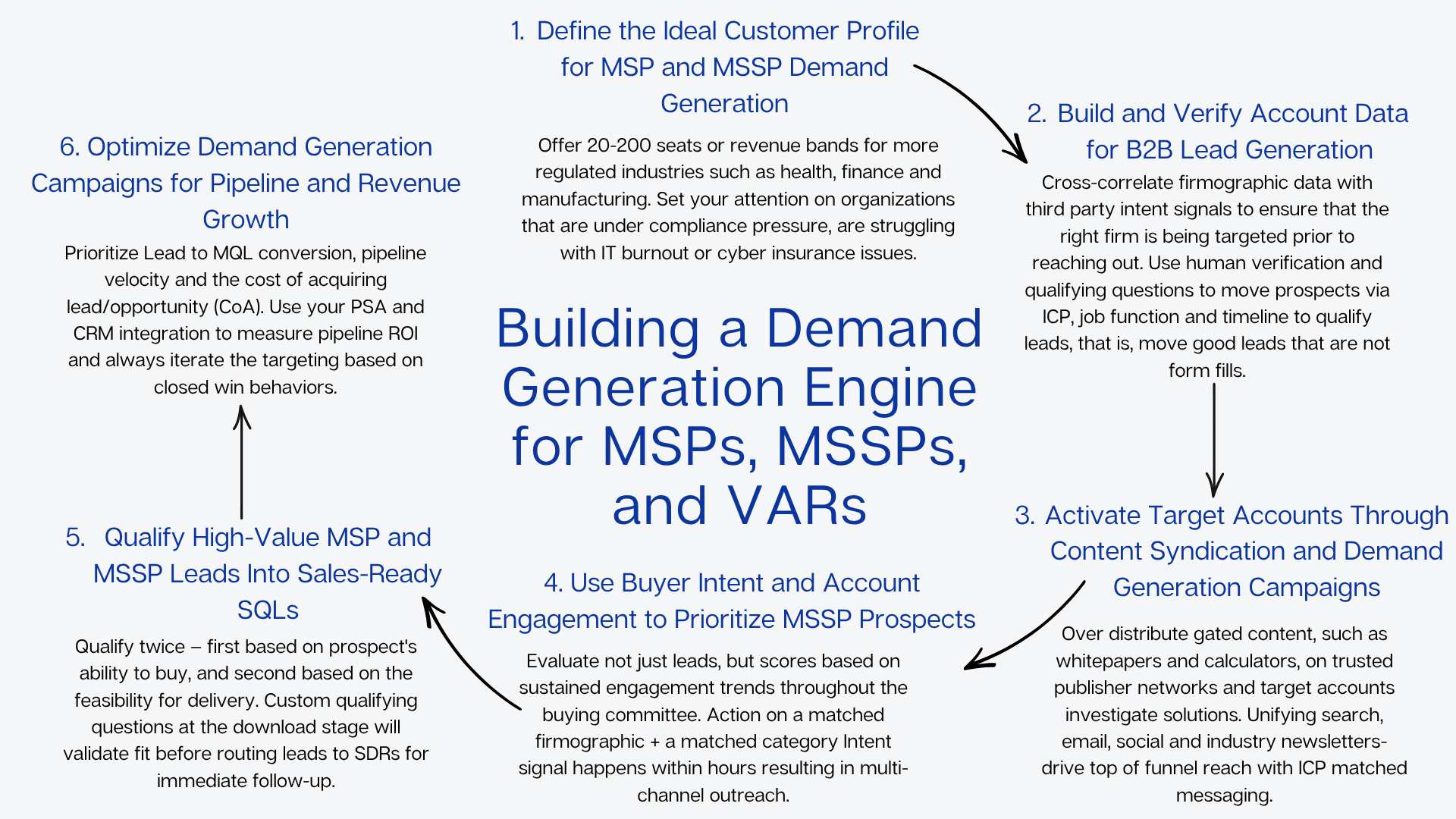
Building a Demand Generation Engine for MSPs, MSSPs, and VARs
Conclusion: Why IDBS Global Is the Best Demand Generation Partner for MSPs, MSSPs, and VARs
The key to successful demand generation for MSSPs, MSPs and VARs begins with identifying the right accounts to reach and developing more than just contacts. By verifying account and prospect information, capturing buyer intent, syndicating content and qualifying leads, IDBS Global ensures businesses connect with the relevant prospects. They engage them with the content that matches, and transfer qualified MQLs to SQLs ready for sales. This then builds more focus and predictability into a B2B demand generation process, tied to pipe qualified and driven by revenue.
Demand generation for MSSPs isn’t about quantity, it’s about quality, trust and an impact that’s measurable. That’s what IDBS Global can provide you, for MSSPs and VARs looking for reliable pipeline growth. Specialized data, human verification, integrated campaigns transform demand generation from a cost center into a revenue center for MSSPs.

Author: IDBS Global
Turning Data into Demand, Fueling B2B Growth with Precision and Purpose.