
The Content Cemetery: Why Publishing Without a Distribution Plan Is Wasted Budget
Follow us

In many B2B SaaS teams, publishing is the only goal. They do the research, writing, design, and do SEO work and post it on LinkedIn. Then they just sit back and wait for the results to materialize. After a few weeks the content is hardly touched and barely gets any traffic, leads, or meaningful sales conversations.
This is the blog, white papers, webinars and reports that were really done, but still never found by customers who needed to read them. Problems don’t usually have poor content. It is the lack of a clearly defined content distribution strategy. This is a plan designed to see that all the content assets hit the right people, using the right medium and at the right time.
To make publishing repeatable demand-generating, it is necessary to rely on a robust and effective content distribution plan. Marketing staff instead develop new content and wait for it to perform, relying on a system of smart marketing, re-purposing, syndication, and measurement for the value of each asset. This means increased reach, increased engagement and a more direct link between content and pipeline!
Why Great B2B Content Still Gets Ignored
Publishing Content Is Not the Same as Reaching Buyers
Just because a blog post is published online doesn’t mean that your target audience will find it. B2B buyers are inundated with content from the competition, industry publications, and social media, and are not only busy, but they’re also picky.
Even with well thought out details, it’s possible for a content distribution approach to remain overlooked. Your company page may not be followed, you may not get many views on your blog, and your followers probably won’t open all of your emails. Distribution actively sends your ideas to where buyers are spending time.
Why Creating More Content Does Not Guarantee More Demand
It is not necessarily true that the more the content, the more the demand. What you run into is a problem of your team is running into more and more pages of the content graveyard if each new asset is promoted with the same limitation. There is an increase in demand when valuable information becomes available to prospective buyers over and over again through different channels. One powerful report can back social messages, email marketing, sales discussions, webinar discussions, and syndication placements. Rather than publishing another stand-alone piece of content, it may be better to use one pillar asset as multiple demand touchpoints.
How Content Gets Lost Without Consistent Distribution
Content is lost when promotions don’t last very long after going live. A post can do quite well for a while before newer content starts popping up and displacing the older posts from feeds and searches. Regularly distributed, valuable ideas remain visible. It provides your team with time for testing headlines, formats, channels and audience segments. A structured approach to content distribution, which also allows high-performing assets to get “lost” after the initial release.
What Is a Content Distribution Strategy?
Content Distribution is a documented pathway to the content distribution and content promotion and is an approach that is planned. When you’re targeting a specific audience, it helps to hit them where they are, and increases both visibility and engagement. Therefore increasing ROI. But, even great content can go unseen in today’s saturated digital world without distribution.
How Distribution Extends the Life of Every Content Asset
Content is repurposed and reshared, across touchpoints and over time by strategic distribution. Freshly updated and republished evergreen content becomes relevant, enhances its search engine ranking, and attracts long-term traffic over the course of months or years. This method called for enhancing the value of the initial investment of the content.
Owned, Earned, and Paid Channels Explained
Owned channels are the ones you own, that is your website, blog, email newsletters and social channels that you have and you can control they are cost efficient. Organic mentions, reviews, press and user generated content build trust and credibility and are earned media. Paid media, such as PPC ads, sponsorships and influencer partnerships, ensure that you’re visible and making an impact quickly.
Choosing Distribution Channels Based on Buyer Behavior
Understand the customer journey and choose the channels that they are using at each customer stage. It is found that 88% of consumers believe in word of mouth ads, which is highly effective for early consumer’s consideration phases. Consumers can’t be expected to behave as you’d like. So channel selection should leverage the content habits and preferences of your audience, as well as your specific marketing objectives.
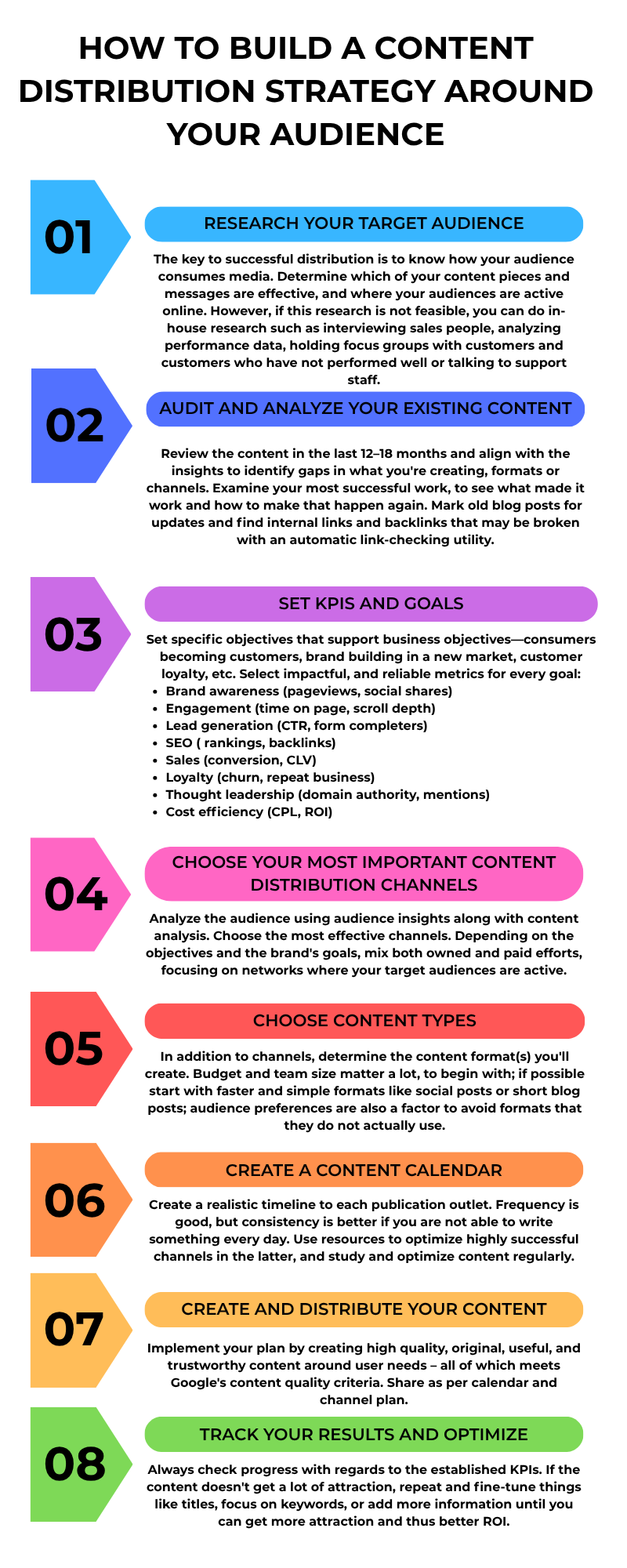
How to Build a Content Distribution Strategy Around Your Audience
How to Turn One Content Asset Into Multiple Distribution Opportunities
Repurposing Long-Form Content for Social and Email
Segment pillar assets (reports, guides, webinars) into statboxes, quotes, frameworks, and mini how-tos (atoms). Translate all content to formats that your ICP can consume. Content repurposing can be done for LinkedIn carousels, short videos, quote graphics and 3-5 email snippets. Stagger releases over 4-6 weeks with CTAs back to original asset or a lightly gated variant.
Turning Research and Insights Into Short-Form Content
Make it easy for readers to share your posts with single insights and visuals on each page: use one chart per post, one single insight per caption. Employ before/after data, benchmark salient features, and “myth vs fact” constructions to initiate comments and shares. Include a one line “take away” statement and a link for the full study for depth.
Extending Content Through Webinars, Communities, and Sales Enablement
Organize a webinar, either live or in a pre-recorded format. This explains the structure of the asset; put together short (30-60 seconds) snippets of the webinar about the social media content. Post sharing the discussion points in relevant communities and Slack groups. Lastly make sure to include a one-pager, an objection handling doc, and an email sequence with the same information.
Using Content Syndication to Reach New B2B Audiences
Republish customized versions on other networks and networks, such as industry pubs, Medium and LinkedIn newsletters, for access to net new decision makers. Track downloads or demo requests, do proper attribution and measure incremental pipeline using Target by ICP.
How Content Distribution Supports B2B Demand Generation
Connecting Content Engagement With Buyer Intent
Measures that tell us about how much time users spent on the pages (time on page, downloads, repeat visits) – when tracked over distribution channels, demonstrates buyer intent. Marketers can prioritize accounts that demonstrate shopper research activity through distribution tactics, such as email newsletters, syndicated articles, social posts, etc. This purpose data allows the sales force to: narrow in on prospects that are consuming solution focused content, which will increase the likelihood of a conversion.
Using Distribution to Reach Target Accounts Earlier
Strategic distribution means placing your content where people who you want to serve start their search of information: industry publications, niche forums, and trusted newsletters. With 42% of B2B buyers looking at 4 to 6 sources, you want your brand to be in the game before they get there. Reach is boosted beyond owned media and performed at the Awareness stage through syndication and paid content amplification.
Moving Engaged Audiences From Awareness to Sales Conversations
Share stage-focused information – awareness-building blogs, comparison documents or case studies – to prepare buyer prospects for sale. Gated assets (e.g., webinars, whitepapers) and clear CTAs engage readers, and turn them into leads. Retargeting helps to keep your brand on their mind. This systematic process transforms content consumers, into sales ready prospects.
How to Create a Repeatable Content Distribution Workflow
Build a Distribution Plan Before Publishing
Take some time to generate the circulation strategy prior to the content going live. Identify the audience, purpose, messages to deliver, communication channels, and format. It also includes a schedule for communications and metrics to track the outcome. This means that the now resources and help last-minute promotion and make it sure that each asset has a clear goal. The distribution-first strategy focuses on promotion, rather than it being a post-launch event.
Create a Content Calendar Across Multiple Channels
Utilize a content calendar to plan and promote content across different channels. Organize launch day news, follow-ups, emails, ads, partner commentary, and reprints. Another effective thing about having a calendar is that it helps your team from getting carried away with one channel and dominated by another. Produces a smooth flow and maintains important content in view.
Automate Repetitive Distribution Without Losing Relevance
Automation can automatically schedule posts, send email sequences, and automate follow-ups. Utilize it to save time, yet customize each message by each audience segment. With generic automation, content can come across as unengaged. Use a blend of automation and manual cross checking, timely content insights, and channel-specific messaging.
Keep a Content Memory System to Reuse High-Performing Assets
Keep a consistent content library that documents the topics, audience, channels, performances and re-purposing of each piece of content. This will be your ‘content memory system’. If it is a topic that is going well, review it again with new information, examples or a new presentation format. It is often more efficient to reused existing, proven content rather than creating it from scratch.
How to Measure Whether Your Content Distribution Is Working
Track Reach, Engagement, and Content Consumption
To start, you need to keep an eye on how much content people watch and how they deal with it. Popular metrics are page views, the number of unique visitors, social shares, time spent on page and scroll depth. These metrics provide insight into how well your content is found and engaging enough to keep everyone retained. If high-reach messages aren’t getting many engagements, this is a chance to improve the messages and focus them more precisely. None of the channels are equally effective. Analyze and segment traffic by:
- Organic search
- Social media
- Rreferrals
- Paid ads
Measure Traffic and Engagement From Each Distribution Channel
Use engagement metrics by channel. Check where CTR and bounce rates on pages are occurring and determine which platforms are responsible for quality visits. This can help you allocate budget and/or effort to the highest return channels.
Connect Content Engagement to Leads, Pipeline, and Revenue
Content should be targeted to achieve conversions or results that will benefit the business. Track performance of conversions, form submissions, demo requests and attributed revenue per individual piece of content. Track engagement as it moves prospects along the pipeline using these in concert with CRM and marketing automation data. This equates with closing the gap between content marketing and the business goals.
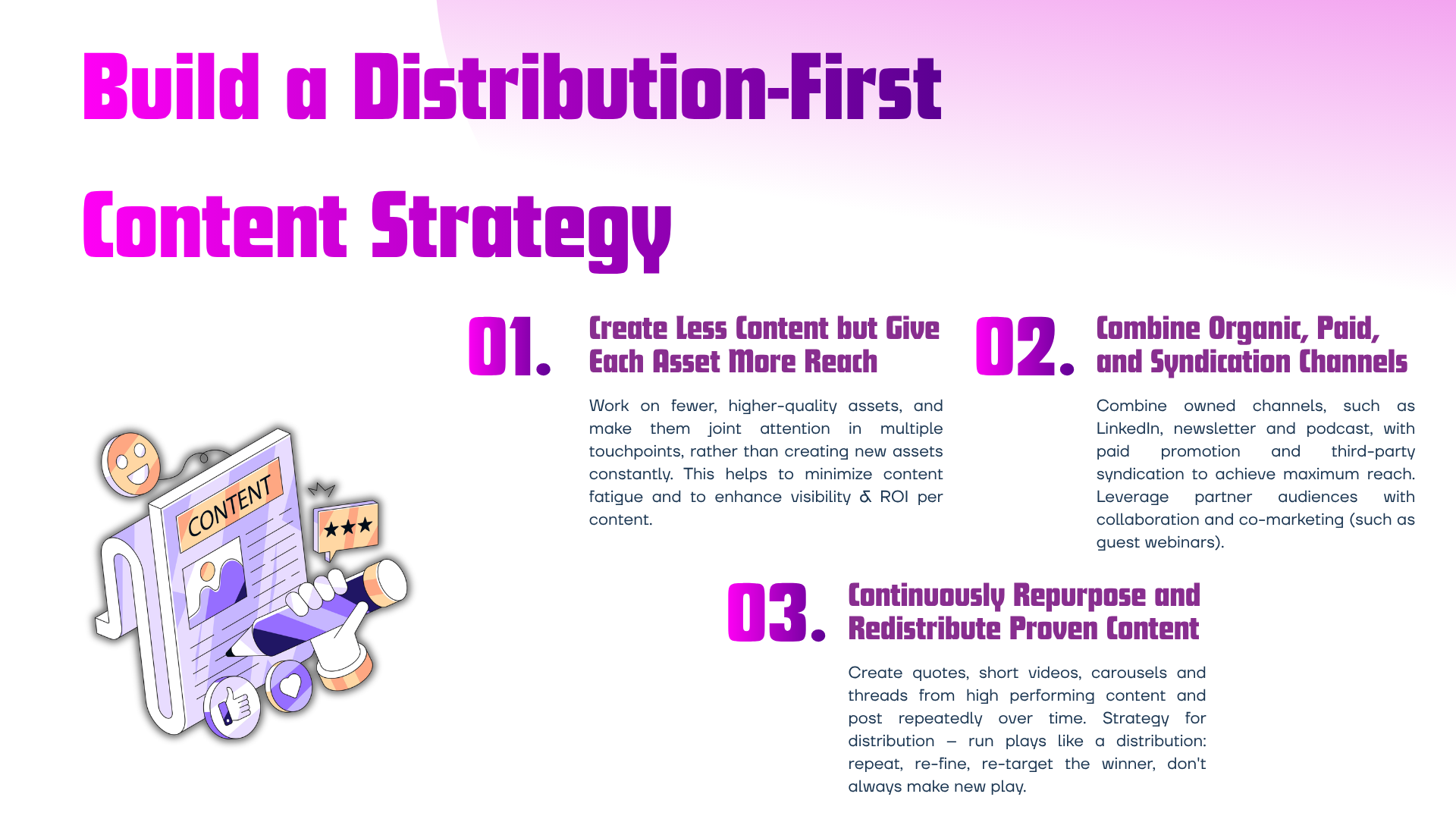
Build a Distribution-First Content Strategy
Conclusion: Stop Publishing Content That Never Gets Seen
The best content should be published more than once. Boosting up your idea is a good thing. But if there’s no content distribution strategy, that idea only becomes part of the content graveyard layout, creation, and ignored. Make distribution or supporting products a part of all plans from the start. Know where your buyers like to look. Promote every creation on a number of different platforms such as share owned, earned, paid and syndication media. Lastl, track your performance by engagement, pipeline and revenue.
Breakdown the core in the system and build the demand in the chain through the use of a content distribution strategy. Don’t repeat “What should we publish next?” or Begin to ask the question, “How shall this asset be made available to those who are in need?”
Every asset has a longer life, a larger audience. It has a greater opportunity to play a part in your business’s growth when distribution becomes a fundamental element of content production.

Author: IDBS Global
Turning Data into Demand, Fueling B2B Growth with Precision and Purpose.